Build In-House, Hire an Agency, or Partner With a Specialist
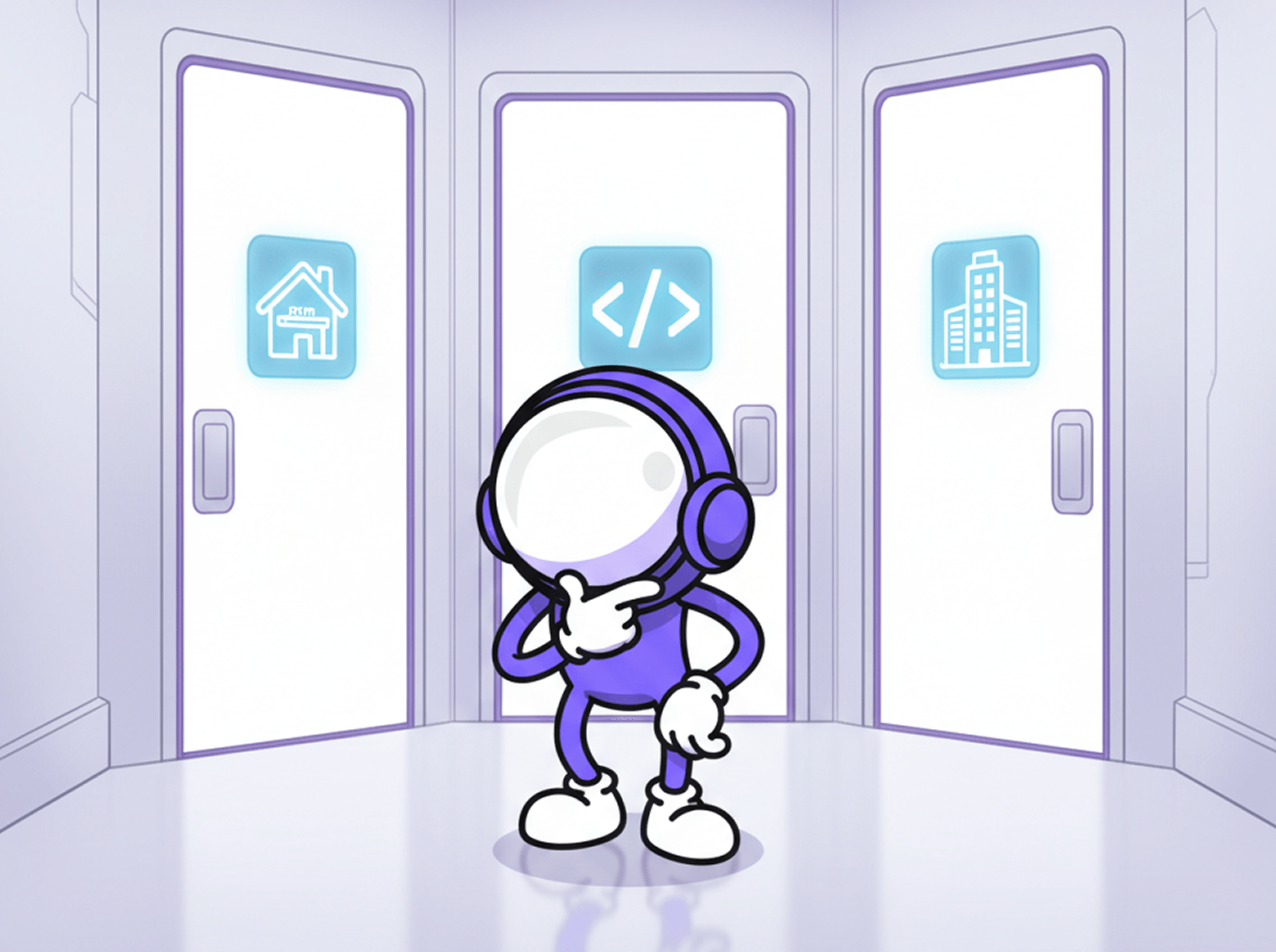
Every CTO eventually hits this moment. The board wants AI. The roadmap needs it. The competitors are already doing something with it. And you're sitting there with three options that all have a catch.
Build AI in-house. Hire a big agency. Or find someone in between.
We've seen all three play out across 110+ projects. Here's the honest breakdown.
Build In-House - The Dream That Takes Longer Than You Think
Total control. Your data, your IP, your roadmap. On paper, building in-house is the obvious answer for any company that takes technology seriously.
The reality hits differently.
Finding senior AI engineers right now is brutally competitive. The demand is real, the talent pool isn't deep enough, and by the time you've hired, onboarded, and aligned a team around a problem, your market has already moved. Most companies underestimate this by months, not weeks. According to the World Economic Forum (opens in new tab), AI and machine learning specialists rank among the fastest-growing and most in-demand roles globally - with supply nowhere near catching up.
And even when the team is in place, the work is harder than expected. Integrating AI automation into existing infrastructure, especially if you're running ERP, CRM, and custom tools side by side, is never as clean as the architecture diagram suggests. Edge cases pile up. Scope creeps. The prototype that looked great in month three looks very different by month nine.
Building in-house makes sense when AI is genuinely your core product - when the system you're building is the thing you're selling. For everyone else, it's often the slowest and most expensive path to results that could've been achieved another way. As Grafana Labs (opens in new tab) put it when describing their own build vs buy framework: the real question isn't which option is best in theory - it's which one gets you to outcomes fastest without closing future doors.
The Open Source Route - Powerful, But Not a Free Lunch
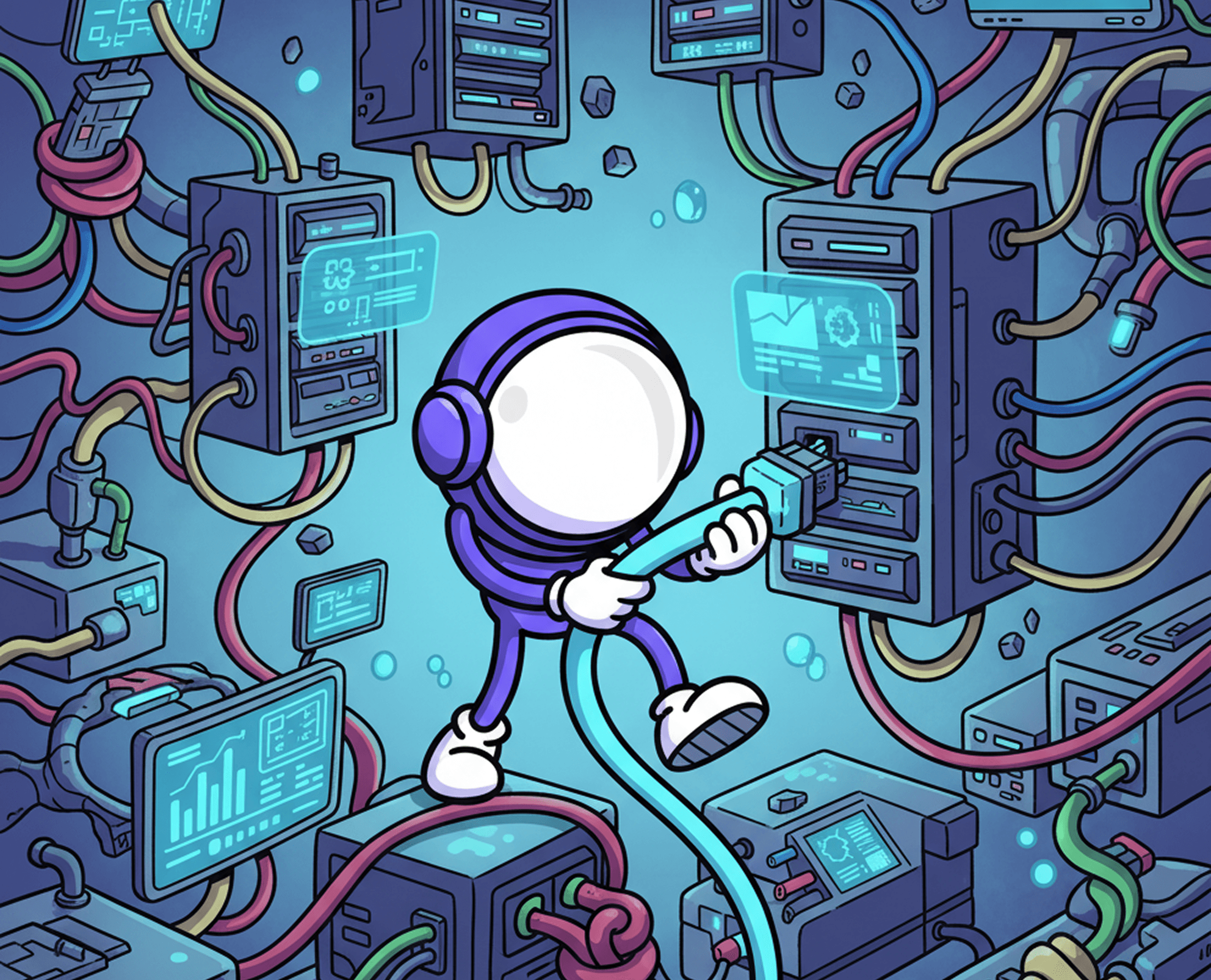
Some teams avoid the decision to build in-house entirely - assembling open source models and tools themselves. It sounds cost-effective until you factor in the time to evaluate, integrate, maintain, and update everything. There's no shortage of capable open source AI tools, and for teams with strong engineering depth and time to experiment, they offer genuine flexibility and control.
But open source is a foundation, not a finished solution. Someone still has to design the architecture, handle the integrations, manage model drift, and keep everything running as your data and requirements evolve. Open source is powerful. But power without experience behind it is just complexity.
For most business teams, the real cost of open source isn't the licensing - it's the engineering hours, the maintenance burden, and the months it takes before anything useful ships.
Big Agencies - Lots of People, Not All of Them Yours
The pitch is compelling. Hundreds of engineers. Global delivery. Proven frameworks. Enterprise credibility.
What you actually get - a project manager, a few mid-level developers, and a senior architect who shows up for the kickoff call and the quarterly review. Everything in between is someone else's problem - until it becomes yours.
Big agencies are optimized for big clients. If you're not Fortune 500, you're not their priority. Timelines slip. Communication gets routed through layers. The solution that emerges is built to specification, not built to work, and when AI implementation fails, it's rarely the technology that's blamed first.
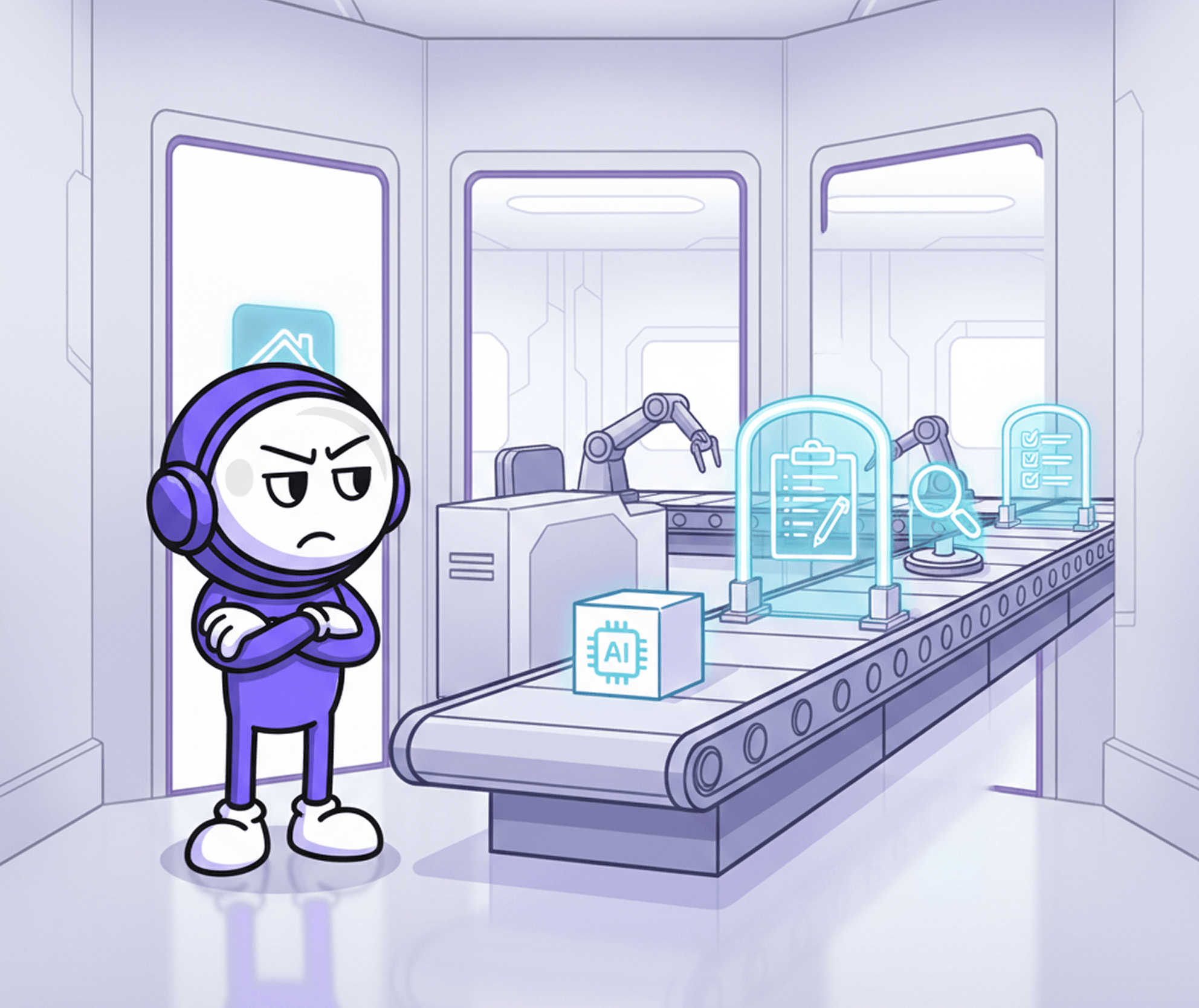
We've spoken to enough companies that went this route to know the pattern. Six months in, they have a deck, a staging environment, and a growing sense that something isn't right. A year in, they're looking for someone to fix what was built.
The other problem is fit. Large agencies build at scale, which means standardized approaches are applied to non-standard problems. Your workflow isn't generic. Your data isn't clean. Your edge cases are the ones that matter most. Generic solutions handle the easy 80% - and fall apart exactly when you need them most.
McKinsey research (opens in new tab) shows that AI initiatives fail most often not due to technology limitations, but due to a poor fit between the solution and the actual business context it was built for.
Specialist Partners - Fast Enough to Matter, Small Enough to Care
There's a type of partner that doesn't get talked about enough in this conversation - and it's where most mid-market companies find the best results.
A specialist team brings focused experience across a specific domain, moves fast because they're not managing a hundred other clients, and builds specifically for your problem rather than adapting a template to fit it. They're small enough that your project actually matters to them, and experienced enough to know where things break before they break. You get the capability of an agency without the overhead, and the focus of an in-house team without the hiring nightmare.
A specialist partner isn't the right call for every situation. If you need global deployment across dozens of markets, or enterprise-grade SLAs with round-the-clock support, a larger vendor makes more sense. But for most mid-market companies building real AI into real workflows - this is where the best results happen.
Here's what this looks like in practice. A professional services company came to us with 200+ employees, 6 disconnected tools, and a BI setup that technically worked but didn't work in practice. Their analysts spent half the week cleaning data instead of using it. Quarterly reports took six hours. Leadership decisions were made on numbers nobody fully trusted.
We built an AI business intelligence platform (opens in new tab) that connected their entire stack and answered complex business questions in plain English. No SQL. No waiting. No analyst in the middle. Three weeks to integrate. Real results within the first month - 3x faster access to insights, 30% reduction in overtime costs, 25% less scope creep.
That's not a case study we're proud of because the technology was impressive. We're proud of it because it solved a real problem for real people, fast.
So Which Option Is Right for You?
Build in-house if AI automation is your core product and you have the runway and appetite to invest in a team for the long term.
Go open source if you have strong engineering depth, time to experiment, and want full control over your stack.
Hire a big agency if you need enterprise compliance, global scale, and have the budget and patience for a long engagement.
Partner with a specialist if you need something built well, built fast, and built specifically for how your business actually works.
Most companies reading this fall into the last category. Not because they can't build, but because the fastest path to real results isn't always the one that sounds most impressive in a board meeting.
Three Questions to Ask Before You Decide
Before you commit to any path, run through these honestly:
1. Do you have the talent - or the time to find it? Not just developers. AI engineers who understand your domain, your data, and how to ship something that actually works in production. If the answer is no, or not yet, the decision to build in-house will cost you more than money.
2. Is your problem standard or specific? If your workflows, data, and edge cases look like everyone else's, an off-the-shelf solution or large agency might be fine. If your business has complexity that doesn't fit a template - and most do - you need something built around it, not bent to fit it.
3. What does failure cost you? A year wasted on an in-house build that never ships. Six months and a big invoice for an agency deliverable nobody uses. These aren't hypotheticals - they happen constantly. The right question isn't which option is cheapest upfront. It's which option you can least afford to get wrong.
How Mygom can help
We've spent four years and 110+ projects figuring out how to build AI that ships and sticks. If you're trying to figure out the right path for your business, let's talk (opens in new tab). One call, no pitch deck, just an honest conversation about what makes sense for you.
Gabriele J.
Marketing Specialist