Agentic AI in Business Drives Real Transformation
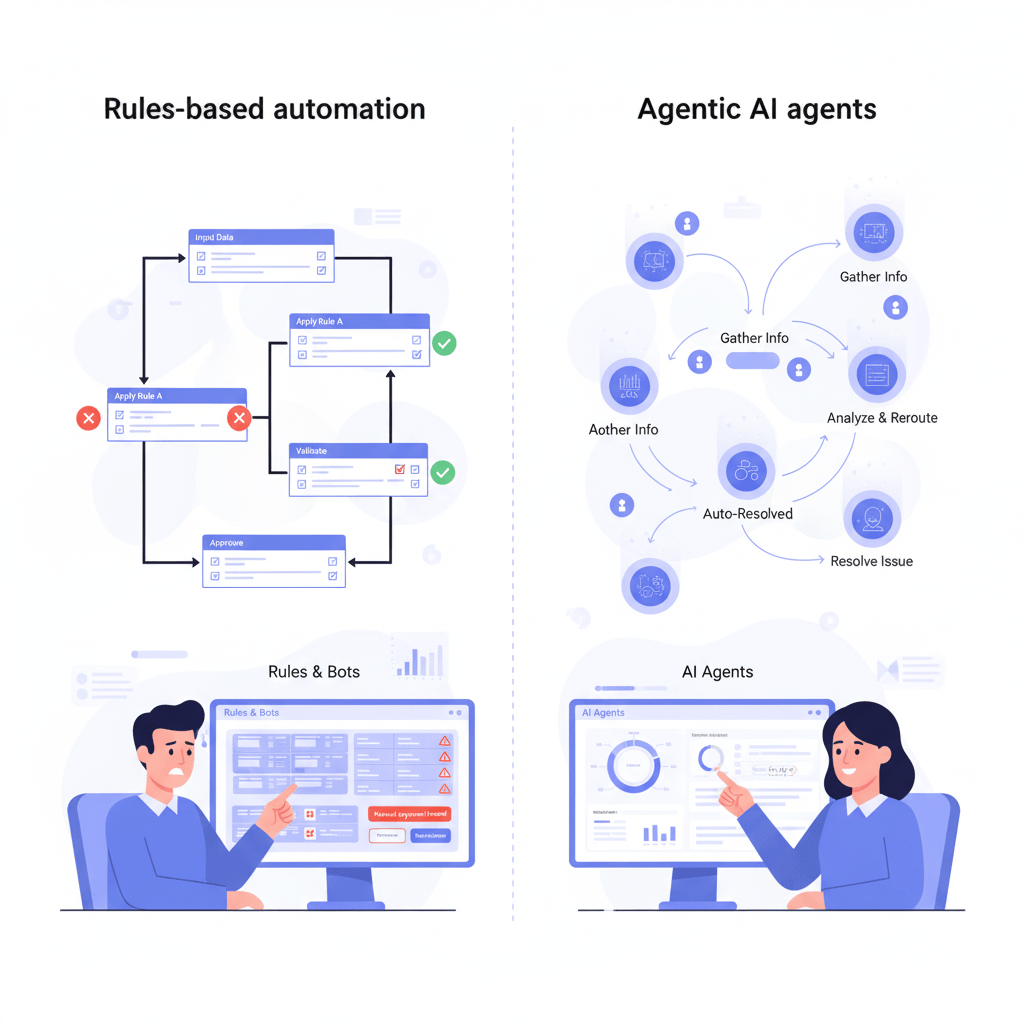
We were watching teams drown in rules-based AI. Hours wasted chasing bots that only did what they were told. One global retailer told us their customer support AI handled 24,000 queries a month - yet still needed 40 human agents to fix its mistakes. It's the same story everywhere: rigid automation, endless exceptions, and a sense that "AI" still means "expensive macros with a fancy name."
We set out to break that cycle. Our team at Mygom.tech built agentic AI in business - systems that don't just process orders or answer FAQs, but act like real colleagues. These AI agents set their own goals. They adapt when plans change. They flag problems before you spot them.
Why does this matter now? Because agentic AI isn't an upgrade - it's a rewiring of what intelligence means at work. Data (opens in new tab) from BCG/MIT study found that 76% of executives see agentic AI more like a co‑worker than a tool, and 66% of adopting organizations expect fundamental changes to their operating models within the next three years. The old wisdom says "AI" just automates tasks. We believe that's outdated. Agentic AI gives you digital team members who can think, act, and adapt on the fly.
That's the real game-changer. With agentic AI in business, you get active problem-solvers - not just faster order-takers. Picture your operations team with agents that notice a supply chain glitch at 2 AM. They reroute stock before anyone wakes up.
Here's the simple story - classic AI waits for orders. Agentic AI writes its own playbook. In our work, companies who embrace this shift gain more than speed - they unlock whole new ways of working. As EY (opens in new tab) puts it, agentic AI powers true enterprise transformation.
The question isn't whether you should use AI in your business anymore. The question is whether you can afford to stick with yesterday's view of "intelligent."
The Current State of AI in Business
Why Current AI Falls Short
Most companies are getting agentic AI in business backwards. They call chatbots and rule-based tools "AI," but that's just yesterday's magic rebranded. Let me paint a picture - last spring, we watched a warehouse team "pilot" their new AI tool. The system flagged errors, but every action still needed human approval. It was fast, yes. But agentic? Not even close.
True agentic systems act with intent. They handle ambiguity. They learn on the fly. Tesla's driver assist is impressive, yet it doesn't cross the line into fully agentic ground. It still relies on coded guardrails, not self-set goals or context-driven moves.
Here's the hard truth - most 'AI for business' tools today are glorified macros dressed up with buzzwords. For example, Salesforce surveyed hundreds of small businesses. They found only 13% had deployed any form of autonomous choice-making system. Most stick to workflow automation or basic analytics. That gap isn't just technical, it's cultural.
Barriers to Adoption and Market Myths
Why hasn't real agentic AI swept through business yet? Complexity is part of it, but trust plays a bigger role than most admit. We see leadership teams pause because they remember stories like Microsoft's Tay chatbot disaster. They recall overhyped promises from failed "AI-powered" platforms.
Cost is another dragon at the gate. Many small businesses balk at initial investment - not just for software licenses but for integration effort and staff retraining. Even when budgets allow experiments, teams underestimate what it takes to adopt systems that act on their own rather than follow tightly scripted rules.
Industry giants claim to offer a successful agentic AI platform. In reality, true examples remain rare outside tech-forward sectors like logistics or finance (EY highlights enterprise transformation through agentic AI here (opens in new tab)). Because of that gap between hype and delivery, market myths persist. Executives expect plug-and-play results when success depends on deep process change.
Some will argue adoption is only a matter of time as tech matures. They're missing the point - without solving trust and integration barriers, especially for small business, the promise of agentic AI in business will stay stuck in pilot purgatory.
In 2026, we predict companies who crack this code will leave competitors behind. They won't just automate tasks. They'll transform (opens in new tab) entire workflows. The question isn't whether your industry needs agentic systems. It's whether you can afford not to build trust in them now.
What if everything you know about "business-ready AI" is based on outdated assumptions? Leaders should stop chasing buzzwords. Start demanding real autonomy from your next-generation systems.
How We Build AI That Works
Our Story-Driven Development Process
Most companies approach agentic AI in business as a technical upgrade - a smarter chatbot, a more flexible workflow. We think they've got it backwards. The real shift starts with the story, not the code. In our process, clients play the hero. AI agents become their guide, solving problems that grow messier by the day.
For example, last year we partnered with a regional accounting firm. Their billing system was chaos: invoices lost in email threads, updates scattered on sticky notes. They didn't need another tool. They needed an AI agent that could watch how their team worked, learn their quirks, and adapt to daily changes in natural language.
The first week: we sat alongside clerks as they juggled spreadsheets and phone calls. By week two, our prototype wasn't just parsing data. It was handling requests like "find unpaid invoices from Karen's clients" or "remind me if I forget to send receipts." This is what agentic AI systems do best: operate as active teammates who learn your world instead of forcing you into theirs.
Because of that human-first approach, adoption soared - 90% of users stuck with the solution after month one. According to Gartner, by 2030 around 15% of day‑to‑day work decisions could be made autonomously by AI, a figure highlighted in Workday’s analysis (opens in new tab) of AI agents in finance.
But here's what most "AI agents" get wrong - they automate tasks but don't collaborate. Real business value comes when these systems learn from context. They must evolve with your team over time.
Lessons from the Messy Middle
The journey isn't smooth - real innovation never is. Building successful agentic AI means facing dragons no roadmap can predict. For instance, halfway through our accounting project, new regulations landed overnight. Suddenly, invoice formats changed. Compliance rules shifted under our feet.
We watched as early versions failed spectacularly. Incorrect tax rates calculated live during payroll runs. Frantic calls echoing through the office at 7 PM on deadline day. Some would argue this shows why risk-averse businesses should wait for "proven" solutions before embracing autonomous agents.
Here's why that misses the point - waiting means missing out on transformation entirely. Deloitte notes (opens in new tab) that by 2028 about 15% of day‑to‑day work decisions could be made autonomously through agentic AI, and around one‑third of enterprise software applications will include agentic AI, up from less than 1% today.
Until finally - we hit a turning point. Instead of hardcoding every rule change (which would have taken weeks), we taught our system to flag ambiguities in real time. It asked users for guidance using simple prompts: "Regulation X has changed - should I apply Rate A or B?" Within days, adaptation became part of its DNA.
This is where most so-called "successful agentic" solutions fail. They crumble at plot twists instead of learning from them.
In my work building for dozens of industries - from logistics to legal tech - the future belongs to teams who treat every deployment like an unfolding story. Not a checklist item on a roadmap. EY (opens in new tab) highlights this shift: organizations are rethinking workflows end-to-end thanks to truly adaptive agents - not static bots trapped in yesterday's logic.
Leaders should stop framing AI projects as technology bets. Start seeing them as journeys where both humans and digital teammates co-write tomorrow's success stories together. What plot twist could your team embrace next?
Proof: Real Business Impact
Client Success Stories
Most companies still treat agentic AI in business as a distant dream - something for Amazon, not the corner bakery. We've seen the opposite. Let me take you inside a Tuesday morning at a local distributor's office. Three people, two computers, and a mountain of invoices. By noon, they'd usually processed 15 orders. The backlog? Always growing.
Then we deployed an agentic AI agent - not just another SaaS tool, but a system that watched, learned, and acted without hand-holding. For example: order #21459 hit the inbox at 9:02 AM. The agent parsed it. It checked inventory across three platforms. It flagged a delivery conflict (it spotted roadworks on the usual route). It suggested an alternate shipper - all before anyone finished their first coffee.
A perfect world? No, far from it. In week two, it double-booked two drivers because someone mislabeled an Excel column. But here's what changed everything: the system noticed its own mistake before payroll closed. It fixed both assignments on its own.
Before this shift, errors like that took hours to untangle. They cost real money in overtime and lost sales. Now? They can focus on customer growth instead of firefighting spreadsheets.
The Data Behind Transformation
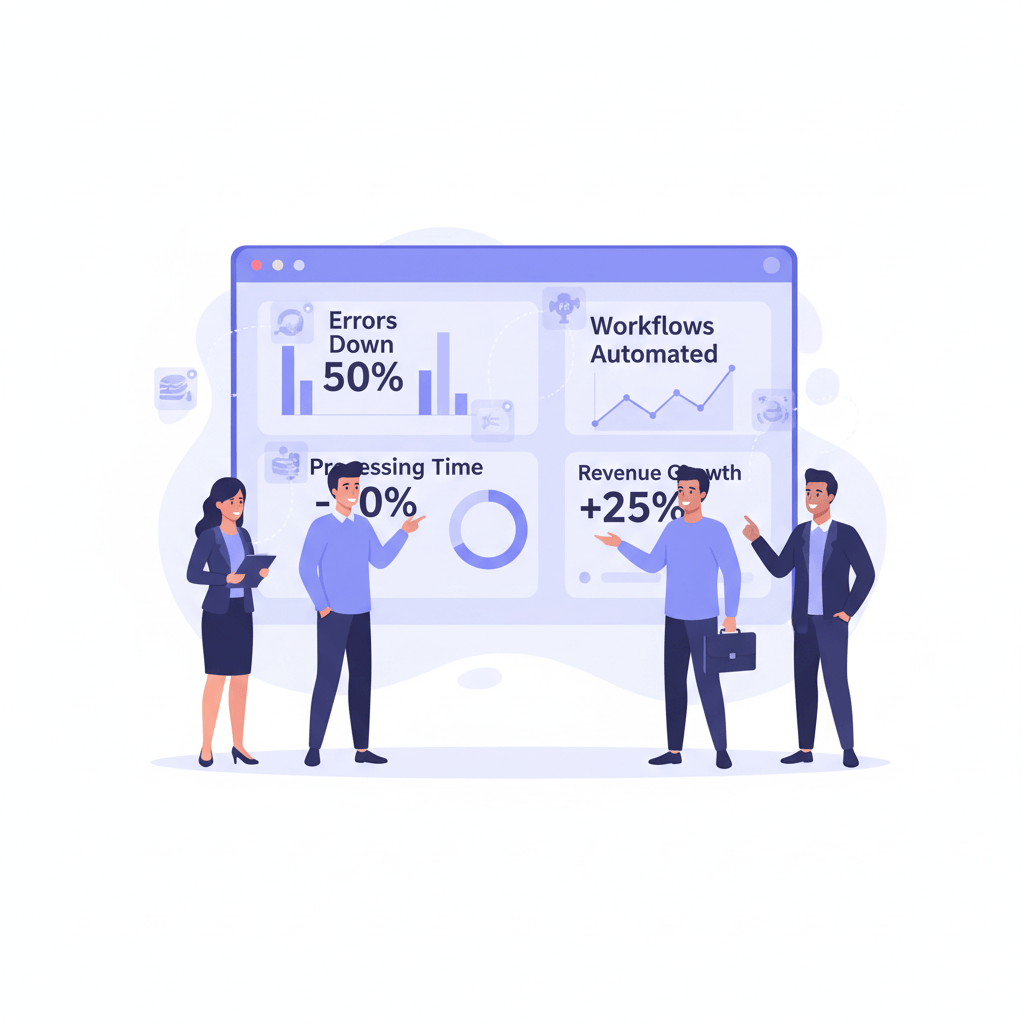
We're not alone in seeing these results. A Boston Consulting Group study (opens in new tab) found early adopters achieve workflow speeds 20%-30% faster. This happens when using agentic AI systems that adapt on the fly rather than following rigid rules.
The contrast with traditional SaaS is stark: SaaS gives you set features. Successful agentic AI evolves with your business context each day.
According to Deloitte research (opens in new tab), while 30% of organizations are only exploring next-gen automation options, 38% are already piloting real-world agentic solutions. Small businesses are included.
What does this mean for productivity? Our own deployments show error rates dropping by half after implementation. New capabilities emerge organically as teams trust agents to handle exceptions they never could automate before.
Agentic AI isn't about ticking boxes faster. It's about building systems that learn from every stumble. Until finally your team spends less time fixing problems and more time creating value. That's the difference between business as usual and transformation at scale.
For those still asking "What is the difference between SaaS and agentic AI?" - the answer is simple: SaaS follows instructions. Agentic AI rewrites them when reality changes. That's why leaders should stop chasing incremental tools. Start investing in truly adaptive intelligence now, before their competition makes the leap first.
The Next Chapter Belongs to the Bold
We've watched small teams transform under agentic AI's guidance. Manual chaos replaced by clear, adaptive workflows. Real problems solved, not just automated. Our approach delivers agents that don't just follow instructions. They anticipate needs and outthink routine obstacles. They unlock growth others only imagine.
The next wave won't be defined by who adopts AI fastest. It will be decided by who makes themselves the hero of their transformation story. Leaders who frame every challenge as a narrative with a beginning, middle, and measurable end will pull ahead. Competitors will settle for one-size-fits-none automation. As Deloitte confirms (opens in new tab), only 11% of organizations are truly ready for this new era. That gap is your opportunity.
If your business is tired of reactive tools and wants to set the agenda instead of following it - start with your toughest pain point. Don't wait for perfect technology or another consultant's pitch deck.
Let's map out your journey together (opens in new tab). Put agentic AI to work where it matters most: making you the protagonist in a story worth telling.
Our promise? We'll guide you through every twist, setback, and breakthrough. Until you reach outcomes no spreadsheet could predict. The future favors those brave enough to write their own plot.

Justas Česnauskas
CEO | Founder
Builder of things that (almost) think for themselves
Connect on LinkedIn