AI Literacy Unlocks 2026 Growth - Confusion to Confidence
AI confusion costs time and money. Too many teams waste hours with tools they don't understand. Data from Gallup shows up to 45% of workers now use AI at work (opens in new tab), yet many feel lost in jargon and slow to adapt. We've seen it firsthand - teams nervous about the future, unsure where to start.
So we built a path that skips theory. Mygom.tech helps your team work smarter with real AI skills. The result? Faster adoption. Fewer mistakes. Measurable growth. You can't afford to sit out the next wave.
TL;DR
- AI literacy in the workplace is now table stakes for growth. Teams with strong AI skills deliver projects faster and feel more confident.
- New tools focus on daily workflows, not just dashboards to ignore. Real gains show up in weeks, not months.
- Compliance matters more than ever. Companies must follow updated guidance to avoid privacy risks and audit failures.
What's New in AI Literacy for the Workplace
Latest Features and Tools
AI literacy now means more than reading about ChatGPT. Teams face real workflows. Deadlines pile up. Clients demand answers. Pivots happen fast.
This year, new AI agents promise less friction. A logistics firm rolled out (opens in new tab) an AI knowledge base, as seen in recent industry implementations. Week one brought a flood of system questions—what to automate, where data lived, but by week three, manual lookups dropped significantly, freeing staff to spend less time searching and more time solving problems.
Recent platforms integrate with daily tools. Not just another dashboard. A mid-sized agency tested an AI assistant inside their CRM. Client queries got answered 40% faster. This freed up afternoons for strategy work.
Benchmarks echo these stories. According to Yuxor (opens in new tab), companies investing in ongoing AI education saw project delivery times shrink by nearly half. That's knowledge about AI agents turning into real speed gains.
Key Industry Announcements
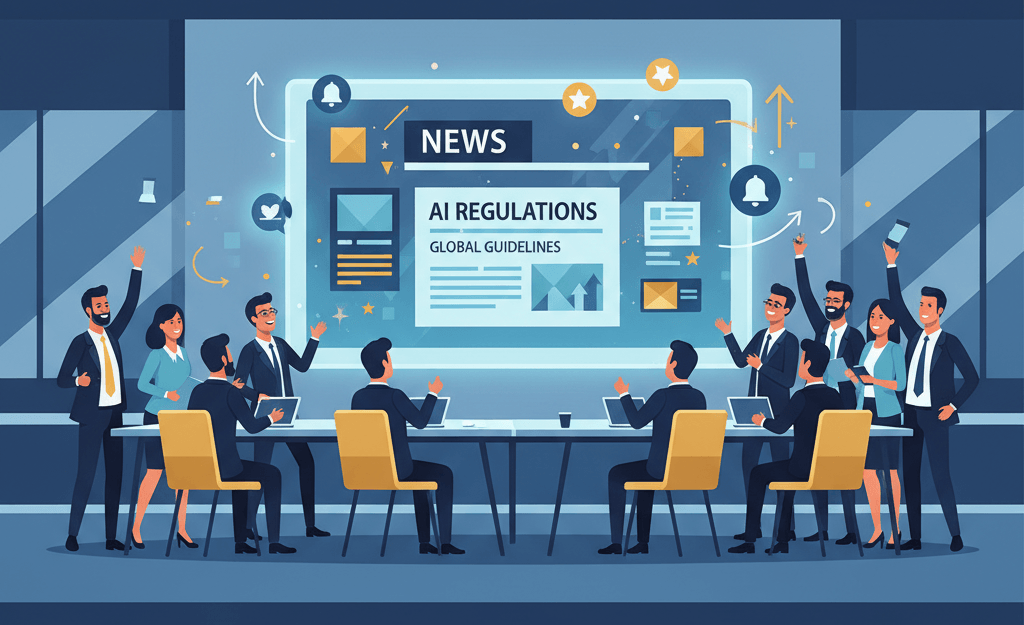
The Office of AI & Technology released fresh guidance this quarter. A playbook for business leaders building AI skills at scale. The message? Don't just train once. Make learning ongoing and visible across departments.
A recent survey (opens in new tab) found that high AI literacy teams reported higher productivity. Also improved morale. Employees felt empowered, not anxious about automation.
Because of that shift, we see tangible ROI. Organizations adopting regular "AI skill sprints" report better retention. Technical staff tend to stay longer when they continue learning.
In short, the newest chapter in AI literacy is active. It's ongoing and is fully integrated into daily work processes. AI literacy across the workplace isn't optional, it's essential for growth-minded businesses.
Breaking Changes and Critical Guidance
New Compliance Requirements
AI literacy in the workplace is running into new walls. Compliance being the tallest. This year, companies can't just experiment with tools. They must follow updated guidance for AI use across teams. Especially when handling personal or sensitive data.
One financial firm learned this the hard way. During a routine audit last quarter, they found a gap. Their automated onboarding process failed to flag privacy risks. The team trusted an AI workflow to redact client details. The system missed ten records. That misstep triggered an internal review. It forced an urgent update to compliance checks.
Privacy and security are no longer side quests. They're the main plotlines for every enterprise adopting AI tools. Data from AI NEWS (opens in new tab) highlights that companies prioritizing compliance frameworks see fewer incidents. They scale smoother.
What Teams Need to Do Now
If your team has integrated LLMs or automated decision systems, it's time for a checkup. First step: run a full audit against the latest guidelines. Use the Department of Labor's AI guidance (opens in new tab) as your starting point. Map out where data flows. Who owns each decision point. How privacy is protected at every step.
One global retailer we worked with took action. They assigned two "AI champions" in each department after finding gaps during testing. Those champions led monthly reviews. They caught errors that slipped through automation layers. They retrained teams on best practices.
The lesson? AI integration isn't set-and-forget. Teams need recurring training cycles as standards evolve. This is echoed by AI NEWS (opens in new tab), continuous education, and AI literacy are now cornerstones for responsible growth.

The Transformation: Real Results, Real Teams
You've seen what happens when theory meets practice. After mapping your team's strengths and gaps, you rolled out training that changed how people work. The outcome? Faster project launches. Fewer bottlenecks. Teams actually talking to their AI tools like trusted colleagues.
We watched managers go from hesitant to hands-on in weeks. Developers started using new APIs without waiting for permission or extra help. This isn't about top-down mandates or shiny tech demos that fade after launch day. It's the measurable shift in confidence you get from doing the hard work of skill-building. Then seeing it pay off every quarter.
If you're facing stalled pilots or slow adoption, let's talk (opens in new tab). Practical AI literacy unlocks results across your business, not someday, but next sprint. We'll walk through your actual workflows. Build a plan that fits reality, not theory.
Because the only story worth telling is one with a clear before and after. We make sure yours ends with teams empowered, not overwhelmed. Investing in targeted AI education delivers returns you can see on the ground.
Ready for transformation that sticks? Let's write your next chapter together (opens in new tab).