The Real Cost of AI Every Leader Must Know
What AI Integration Really Costs and Why Budgets Often Fail
Everyone talks about AI like it’s a magic button. Pay €25K, flip the switch, and boom - automated business running itself. But that’s not the real cost of AI integration. I’ve built AI systems for companies from 10 to over 1,000 employees, and here’s what you really need to know, not just the invoice price, but the real cost in time, money, and your team’s energy. If you go in blind, you’ll blow your budget and blame AI when actually you just weren’t ready.
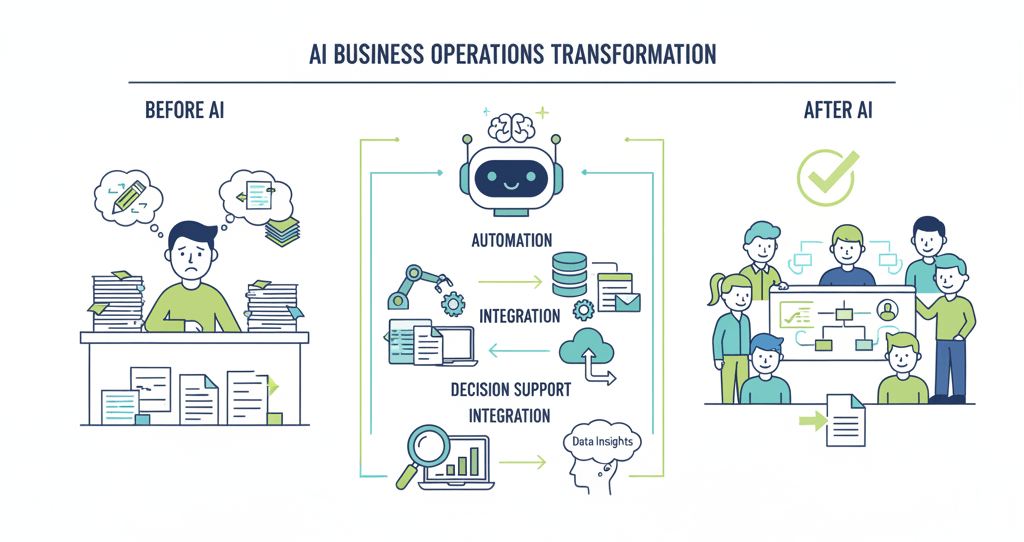
A Syndicode analysis (opens in new tab) shows that AI integration can cost anywhere from €5,000 for simple automations up to over €500,000 for complex custom enterprise solutions. But the real cost isn’t just about software. It includes complicated integrations, hidden technical challenges, and lots of internal team time you don’t see on invoices.
We’ve helped companies overwhelmed by manual workloads - from startups to large enterprises - and have seen what happens when the real cost is ignored. Projects slow down, teams burn out, and budgets blow up. That’s why we break down every euro, every hour, and every roadblock before writing a single line of code.
Understanding the true cost isn’t just about money. Leaders who underestimate it risk not only going over budget but also losing trust inside their own companies. We help you uncover every blind spot before it causes problems, giving you clear costs and a realistic timeline from start to launch. If you want to avoid becoming another “AI failed us” story, understanding the real cost is key.
The real cost of AI implementation
Understanding the actual cost of AI implementation is key to planning a successful project. It’s not just about the development invoice, you need to account for ongoing expenses and hidden investments. Different project sizes mean very different costs and timelines.
Small AI Projects (Document Processing, Basic Chatbot)
Small AI projects usually automate single workflows like invoice processing or basic chatbots.
The real cost includes:
- Development: €5,000 - €15,000
- API Fees: €100 - €500/month (depends on volume)
- Infrastructure: €50 - €200/month (hosting, databases)
- First year maintenance: ~20% of development cost
- Total Year 1: €8,000 - €20,000
Timeline: 4-8 weeks from kickoff to production
Example: A company processing 800 invoices/month:
- Development: €8,000
- Monthly API costs: €200
- Annual cost: ~€10,400
- Savings: 120 hours/month of manual work (worth ~€3,000/month)
- ROI: 3-4 months
Medium AI Projects (Intelligent Automation, Custom Knowledge Systems)
Medium AI projects are more complex, involving multiple workflow steps and system integrations.
The real cost covers:
- Development: €15,000 - €45,000
- API Fees: €500 - €2,000/month
- Infrastructure: €200 - €800/month
- Integration work: €3,000 - €8,000 (connecting to your existing systems)
- First year maintenance: ~25% of development cost
- Total Year 1: €25,000 - €65,000
Timeline: 2-4 months from kickoff to production
Example: A company building an AI-powered customer support system:
- Development: €28,000
- Integrations (CRM, ticketing, knowledge base): €5,000
- Monthly costs: €800
- Annual cost: ~€42,600
- Savings: 2 FTE customer support roles = ~€60,000/year
- ROI: 9-12 months
Large AI Projects (End-to-End Automation, Custom AI Products)
Large AI projects include end-to-end automation, custom model training, and embedding AI deeply into products.
The real cost includes:
- Development: €50,000 - €150,000+
- API Fees: €2,000 - €10,000/month
- Infrastructure: €1,000 - €5,000/month (serious compute, storage, redundancy)
- Integration work: €10,000 - €30,000
- Training/Change management: €5,000 - €15,000
- First year maintenance: ~30% of development cost
- Total Year 1: €100,000 - €250,000+
Timeline: 4-9 months from kickoff to production
Example: A company building AI deployment into their core product:
- Development: €120,000
- Integrations: €20,000
- Monthly costs: €4,000
- Training: €8,000
- Annual cost: ~€196,000
- Value: Product differentiation, new revenue streams, competitive advantage
- ROI: 18-36 months (harder to quantify but strategic)
Knowing the real cost from the start helps you avoid unexpected budget blowouts and delays. It sets realistic expectations so your AI project can deliver true value.
Understanding ROI and Why It Matters for AI Projects
Calculating the real return on investment (ROI) is critical to knowing if your AI project truly pays off. ROI is the measure of how much value AI creates compared to what it costs. This helps leaders justify budgets and guide future AI efforts.
When measuring AI ROI, consider:
- The total real cost including hidden expenses like team time, training, and ongoing maintenance
- Tangible benefits like saved labor hours, cost reductions, and increased revenue
- Intangible benefits such as better customer experiences and decision accuracy
- A realistic timeline - ROI for AI is rarely instant, it often takes months or years to fully materialize
A common formula simplifies ROI calculation:

To apply this:
- Identify your upfront and ongoing costs (development, personnel, infrastructure, maintenance)
- Estimate the financial gains AI brings (labor savings, new revenue, improved efficiency)
- Calculate net benefits and assess the payback period
For example, small AI projects often yield ROI within months due to quick savings in manual work, while large projects may take years but provide strategic advantages, new revenue streams, and product differentiation.
Tracking ROI continuously is vital because AI models may degrade or require adjustments over time. Budget for ongoing maintenance to keep ROI positive.
Understanding Where AI Projects Slow Down and Cost More
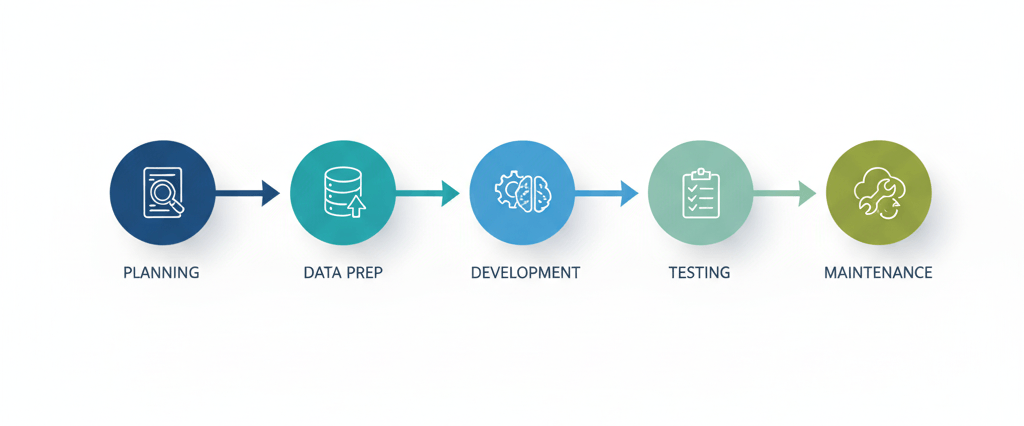
One of the biggest hidden parts of the real cost is time, where many AI projects actually fail. It often happens between weeks 3 and 5, when the messy reality of your data comes to light. AI needs clean, accessible data, but in most cases your data is spread out, inconsistent, or trapped in old systems.
According to Gartner's 2023 research cited in MarutiTech's analysis (opens in new tab), 85% of AI projects fail to deliver business value, but here's what they don't tell you - it's rarely the algorithms. The real killer? Underestimating what it takes to get from demo to daily-use system.
From our experience working on 50+ AI projects, here’s what usually slows things down and drives up the real cost:
- Data gathering takes 20 to 40 hours, hunting down data in multiple places and getting permissions
- Data cleaning consumes 30 to 60 hours fixing formats, removing errors, and standardizing everything
- Labeling or categorizing data could require 20 to 100 hours if you need training sets for AI
- Testing and validating AI outputs demands 10 to 20 hours weekly, plus extra time for edge cases and user testing
This time investment often surprises teams who budget only for development and ignore the heavy lift before code is even written.
Planning and requirements work isn't straightforward either. Expect 15 to 20 hours of leadership involvement plus 10 to 15 hours from each stakeholder for workshops, workflow mapping, reviewing proposals, and compliance checks.
After launch, your team must keep an eye on AI systems with a few hours of monitoring weekly and ongoing improvements monthly. AI isn’t “set it and forget it.” Maintenance contributes to the real cost.
Underestimating these time and effort demands is a major reason 85% of AI projects fail to deliver real business value, according to recent industry research (opens in new tab).
The 30% Rule Nobody Mentions
When budgeting for AI projects, one rule we’ve learned the hard way is to always add at least 30% more time and cost than your vendor quote. This “30% rule” covers all the blockers vendors often don’t include upfront - missed requirements, back-and-forth with teams, unexpected compliance work, and production issues.
For example, a logistics client started with a “simple API integration,” but their outdated OAuth 1.0 system needed three days just to authenticate with our OAuth 2.0 setup. Then a GDPR compliance requirement popped up, forcing two weeks of rebuilding and audits. What seemed like a straightforward €25K project nearly doubled.
Data from EasyFlow.tech (opens in new tab) shows scalable AI automation solutions typically spend 15–20% more upfront but save up to 50% over five years by addressing these headaches directly, rather than patching them later.
Ignoring the 30% extra cost leads to blown budgets, delayed launches, and frustrated teams. Opportunity cost is often overlooked too, each hour your best people spend wrangling data or fixing AI issues is an hour lost from core business growth.
If you hear a quote that feels too good to be true, it probably is. The real cost almost always exceeds initial estimates by a significant margin.
Why Most AI Budgets Are Fiction and How to Build One That’s Real
Most teams ask, “How much does AI cost?” but the real question is, “What’s the full investment - from upfront to ongoing and hidden expenses - to make AI actually work for your business?”
Far too many projects start with flat quotes covering only development. They overlook critical cost areas, including team time spent prepping data, unexpected integrations, security reviews, training, and change management.
For example, integrating an AI-powered app isn't just a €30K build. Initial invoices rarely include the time your team spends prepping data or the costs of connecting systems no one remembers exist.
Data from EasyFlow.tech (opens in new tab) reveals that tailored AI solutions typically start at $50,000 and can climb to $300,000 as complexity grows. These are not scare tactics, they're reality checks. Underestimating by even 20% can derail your timeline or kill ROI altogether.
For example, consider a medium-sized AI project commonly quoted at €25,000. The real investment includes:
- Development: €25,000
- Your team's time (150 hours @ €50/hour average): €7,500
- Integration work (not in scope): €4,000
- Security/compliance review: €3,000
- Training/change management: €2,500
- Failed experiments buffer (20%): €5,000
- First year API/infrastructure: €10,000
- Ongoing maintenance: €6,000
Real Year 1 Cost: €63,000
That's 2.5x the original quote.
Not because anyone lied, but because these hidden costs are real and often not discussed upfront.
A Story of Real Numbers
In our first meeting with a client, we spent two hours mapping their invoice flow on a whiteboard. It looked simple at first - three systems, straightforward data. Then the CFO dropped a bombshell: “Oh, and we have a legacy system from an acquisition three years ago. It still processes 30% of invoices.” Suddenly, our whiteboard looked more like a crime scene investigation.
Their initial implementation estimate was €40K all-in. But after carefully mapping integrations across three legacy platforms, accounting for training four team leads, and scaling API usage from 500 to 5,000 invoices per month, the total first-year cost soared closer to €85K.
Was it worth it? Within five months, the client had automated 150 hours of manual work monthly. This freed senior staff to focus on revenue-generating activities instead of paperwork.
This example highlights how AI development payoffs aren’t just tech expenses, they become competitive advantages you feel in day-to-day operations.
That’s why we insist on brutal honesty from week one. Laying out every cost, hour, and potential roadblock upfront might scare some clients away, but it’s better they walk now than regret it after reality hits at month three.
Hidden costs of AI integration that catch you off guard
Every AI integration project starts with optimism - the promise of streamlined processes and smart automation. But reality soon sets in when your new AI model needs to connect with multiple legacy systems, each with its own language and quirks. This is where the real complexity and the hidden costs of AI development emerge.
For example, a finance client’s “simple” invoice automation project delivered great prototype results with 98% accuracy on test documents. But during the first week of production, their system crashed. API calls didn’t just triple, they exploded 12 times the expected volume. Why? Unnoticed automated email rules were CC’ing invoices to three departments, triggering excessive system requests.
What started as a planned €200/month API cost suddenly ballooned to €2,400 monthly.
This ripple effect of scaling issues is common. You might budget for 500 API requests per month, but production demands can quickly multiply that by 10 or more within weeks. A Syndicode (opens in new tab) analysis shows that once you factor in real-world integration challenges and usage spikes, AI project costs can skyrocket from €12K to over €100K.
These aren’t optional extras. Every dashboard sync, database connection, or additional integration adds hours of work and thousands of euros to your bill.
Security, Compliance, and the Cost of Cutting Corners
Security and compliance costs can quickly add up and become costly pitfalls if overlooked during AI integration. These aren’t just checkboxes on a to-do list, they are legal and operational landmines waiting to disrupt your project and budget.
Regulatory requirements like GDPR can often double both timelines and costs when personal or financial data is involved. Many projects stall mid-way when legal teams discover missing audit trails, incomplete access logs, or gaps in data protection measures.
Delays due to compliance issues can freeze projects for weeks or months, resulting in expensive remediation costs, sometimes tens of thousands of euros, and lost productivity.
Research from MarutiTech (opens in new tab) shows security and compliance reviews often add between €5,000 and €20,000 to project costs, before factoring in remediation costs if problems arise post-launch.
What drives up AI costs isn’t just the software code. The three critical Cs - Connectivity (complex integrations), Capacity (scaling requirements), and Compliance (security/legal), can double expenses if any of these are ignored. Cutting corners on compliance might save money upfront but often leads to paying twice: once before launch and again while rebuilding after failure.
Other hidden costs
Besides direct expenses, AI projects come with additional hidden costs that can surprise you if you don’t plan ahead.
Opportunity cost is a big one. When your best people spend 100+ hours working on AI integration, that’s 100 hours not spent on their regular work. You need to budget for backfills, overtime, or accept delayed progress on other important projects.
Failed experiments are common. The first approach often doesn’t deliver the perfect result. Be prepared to:
- Spend 20-30% more development time than initially quoted
- Go through 2-3 rounds of significant revisions
- Occasional "we need to try a different approach entirely"
Anyone promising perfect AI results on the first try is likely overselling.
Change management is another underestimated cost. AI needs adoption, not just deployment. Budget for:
- Internal communications to keep the team informed
- Training coordination to ensure proper usage
- Addressing concerns and fears about AI replacing jobs
- Celebrating wins to build momentum
In one example, a company built an amazing AI system, but half the team refused to use it initially because they feared job loss. It took three months of active change management to turn that around - a phase that should have started on day one.
The golden rule of AI investment? Pay upfront for a solid foundation, or pay far more fixing shortcuts later. When you hear a vendor quote half the market rate for full integration, ask what’s being skipped, because cheap often means unfinished business.
So What Do You Actually Do With This?
You’ve seen where AI projects commonly fail - messy data, complicated integrations, and costly compliance issues. Now, here’s a proven formula to help you budget realistically and navigate these challenges successfully.
Here's my formula after doing this dozens of times:
For Small Projects:
- Development quote × 1.5 = Real first-year cost
- Timeline quoted × 1.3 = Actual timeline
- Budget: 10-15 hours/week of your team's time
For Medium Projects:
- Development quote × 2 = Real first-year cost
- Timeline quoted × 1.5 = Actual timeline
- Budget: 20-30 hours/week of your team's time
For Large Projects:
- Development quote × 2.5 = Real first-year cost
- Timeline quoted × 2 = Actual timeline
- Budget: 40+ hours/week of your team's time (basically a full-time project manager)
Red flags that show you’re not ready for AI integration
Before starting an AI project, look out for these major red flags indicating your organization isn’t prepared to succeed:
❌ "We don't have time for meetings/workshops" → Then you don't have time for AI. Period.
❌ "Our data is... somewhere... we think..." → Fix your data first. You'll waste money otherwise.
❌ "We need this live next month" → Rushed AI projects fail 90% of the time.
❌ "The IT team doesn't know we're doing this yet" → You're about to create a political nightmare.
❌ "We'll figure out the process while we build" → Lack of clear process leads to multiple costly rebuilds and blown budgets.
❌ "Let's just start with the cheapest option" → Cheap AI usually means you'll pay twice when you rebuild properly.
Recognizing these AI project readiness risks early helps you avoid costly mistakes and failures.
Green flags that show you’re ready for AI integration
You should start an AI project when your organization demonstrates these key readiness indicators:
✅ You've mapped the current process clearly → You know exactly what to automate
✅ You have data (even messy data) → Can be cleaned and prepped for AI
✅ You have an executive sponsor → Leadership support that won’t waver under pressure
✅ You have realistic timeline (3+ months) → Allows careful planning without rushing
✅ You've budgeted for hidden costs → Won't panic when reality hits
✅ You have team capacity → Dedicated time and resources to focus on the AI project
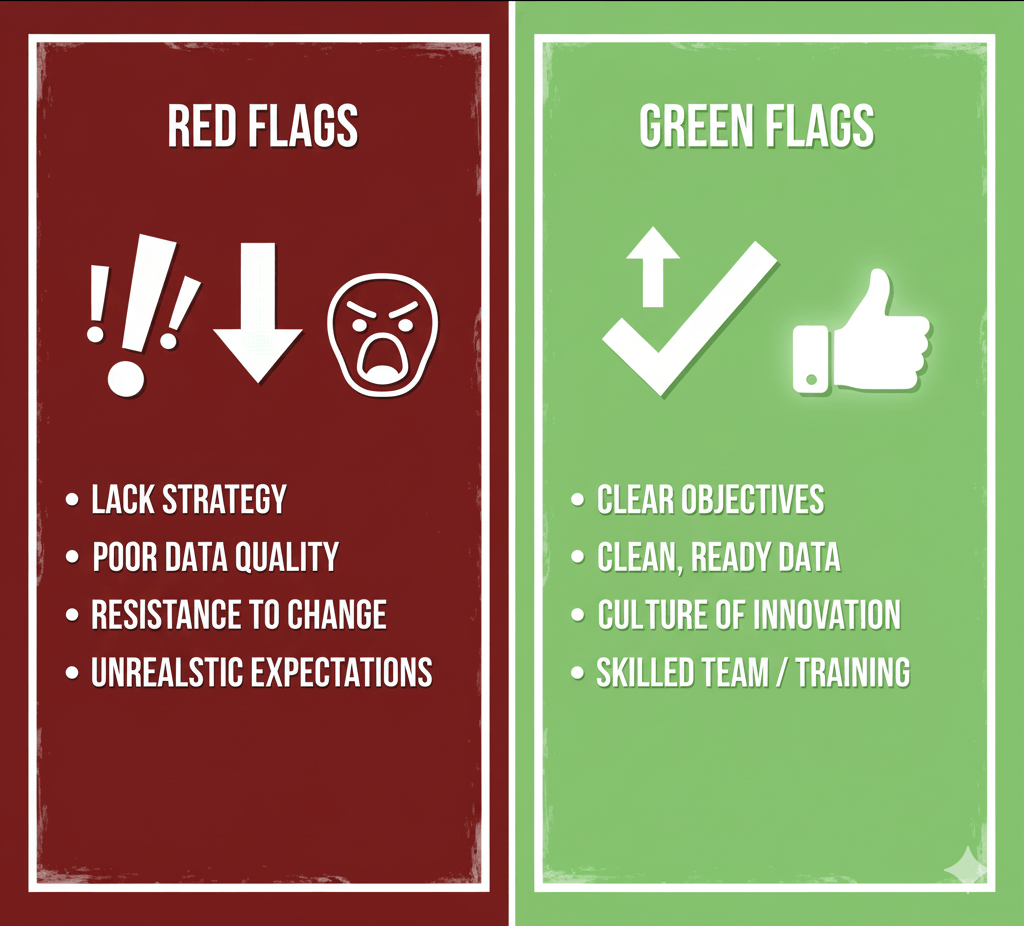
Checking these green flags helps ensure your AI project is positioned for success and smooth implementation.
The Real Story of What Happens Next
We’ve seen what unfolds when leaders base AI budgets on wishful thinking instead of reality - broken timelines, blown budgets, and frustrated teams. These are not abstract risks but real challenges that derail even the most promising AI projects. From experience guiding companies through these fires, we know the key is multiplying vendor quotes by the real-world effort and using a rigorous readiness checklist with brutal honesty. This helps avoid costly dragons before they torch your roadmap.
Our approach isn’t magic - it’s disciplined planning. We build in extra time for crucial steps like planning, data wrangling, integration issues, and team training because these aren’t edge cases, they’re every case. Planning for setbacks means you can celebrate real results.
Here’s a challenge for business leaders - stop chasing the “cheapest AI” option. Instead, ask whether your team is truly ready for this journey, including time, data preparation, and executive buy-in. Don’t fall for fairy tales about push-button automation; demand a plan that enables your company to emerge smarter, stronger, and more competitive.
If you’re facing an AI project now, ask yourself - have I budgeted for real costs - the chaotic data, the integration hurdles, the team time? Or am I hoping for magic? Because hope isn’t a strategy, and many smart leaders learn that lesson the expensive way.
The right investment in AI automation goes beyond cutting costs or saving hours. It transforms how your business operates at its core. Not overnight, but with clear eyes and everyone moving together toward the same goal. That’s how real change happens, and why we keep building stories worth telling.
How Mygom can help you master AI integration
Navigating the real cost and complexity of AI integration requires more than technology, it demands experience, strategic planning, and rigorous execution. As a trusted software company specializing in AI automation, workflow optimization, and custom AI solutions, we partner with businesses to unlock the full potential of AI tailored to their unique needs.
Our experts guide you through every phase - from data readiness and compliance to integration and change management - ensuring realistic budgets, timelines, and successful adoption. We build AI systems that don’t just work, they transform how you operate, giving you a sustainable competitive edge.
If you’re ready to move beyond the hype and invest wisely in AI, let’s start a conversation (opens in new tab). Together, we can build AI solutions that deliver real value today and scale for tomorrow.