Outgrowing SaaS Solutions Unlock Business Growth
Picture this: Your sales team just lost a $100,000 deal. Why? Your CRM couldn't track the custom workflow your client needed. Or your ops staff burned 40 hours last month just making two systems talk. That time is gone forever.
Every day you rely on makeshift fixes, your margins bleed. Manual copy-paste. Endless spreadsheets. Third-party plugins that break. The lost revenue is obvious when deals slip away. But the hidden costs run deeper.
Missed chances to cross-sell. Error-prone workarounds that double your audit risk. Staff so swamped they can't focus on growth. This is what outgrowing SaaS solutions looks like.
This isn't a tech problem. It's a business constraint. When your tools don't fit your growth, every workaround steals from you. You lose speed. You lose your edge. Data shows that 5-10% of broken processes can quietly soak up 60% of your team's effort.
Why do so many companies hit this wall? Because off-the-shelf platforms solve yesterday's problems. Not today's complexity. Growth brings new needs. Unique workflows. Custom integrations. Data flows that patchwork tools were never built to handle.
In this guide, you'll see how outgrowing SaaS drains your business. You'll learn how to spot costly workarounds before they spiral. You'll see which warning signs mean it's time for custom software. And you'll discover how real companies unlocked growth by breaking free from generic tools.
Ready to stop losing revenue? Read on. Start taking back control before another opportunity slips away.

Spotting the Signs You're Outgrowing SaaS Solutions
Day-to-Day Scenarios You'll Know
Your sales team juggles three logins to track one deal. Someone pulls data from one platform. They paste it into Excel. Then they email it to finance. By the time numbers reach leadership, they're old news.
A client in B2B logistics lost $120,000 in missed contracts last year. Why? Their SaaS couldn't handle custom quotes.
Or picture this: Support agents spend Monday mornings fixing broken integrations. They can't help customers. They file tickets with vendors and wait days for answers. Meanwhile, churn creeps up.
According to LaSoft (opens in new tab), many companies only catch the problem when monthly revenue drops and dashboards go quiet.
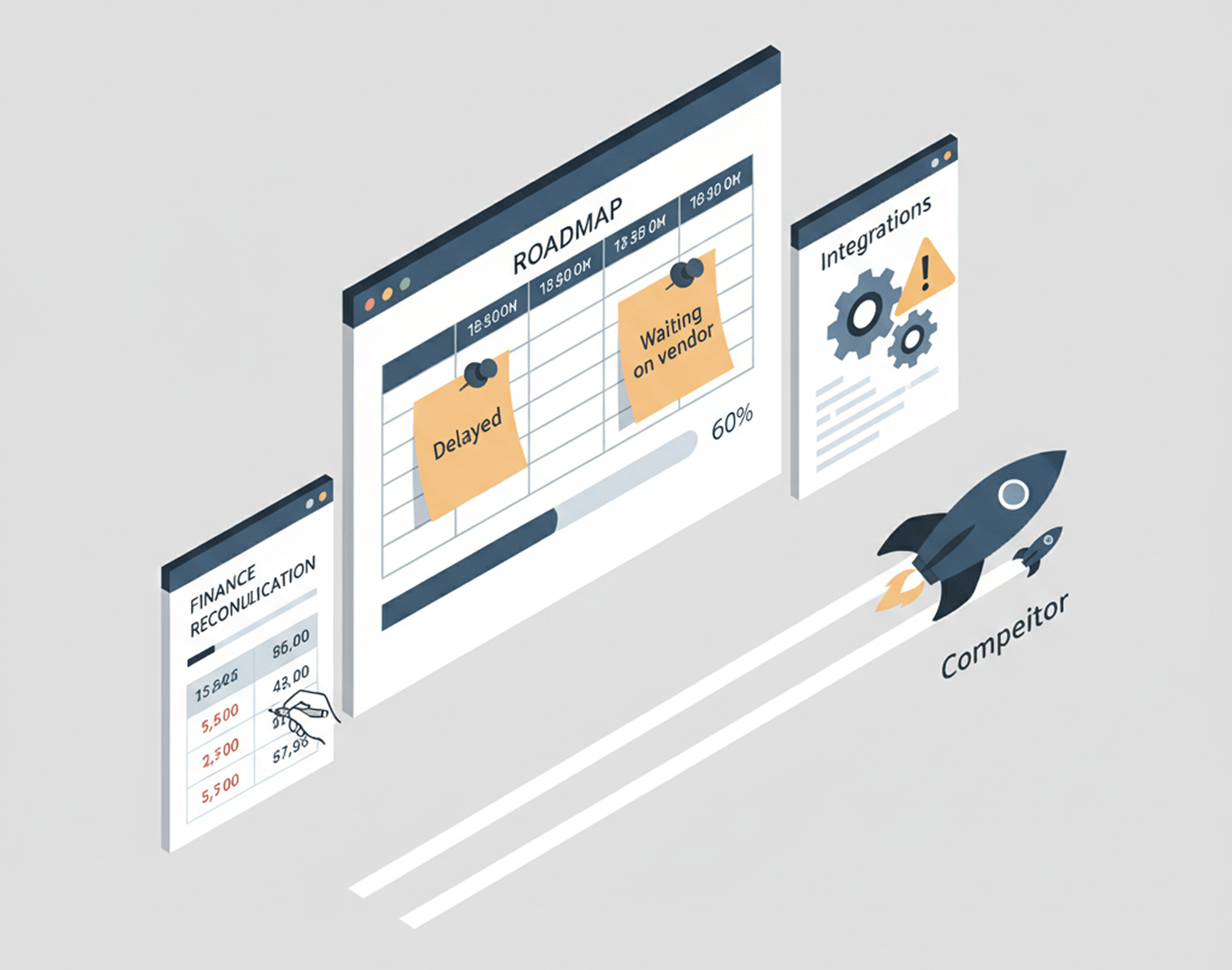
Your team invents workarounds. They string together spreadsheets, automation tools, and manual exports just to move data from A to B. At first, it feels clever. But every time a field changes or an API updates, something breaks. Marketing misses campaign launches because syncs lag by hours. Finance spends two days reconciling numbers that should match automatically. Every patch buys you time but steals focus from growth.
Real Signals That You've Outgrown Your Tools
You know you've outgrown SaaS when "just make it work" becomes your project mantra. Here's how it feels.
Your roadmap stalls every quarter. You're waiting for features your vendor promises but never ships. Sales loses deals because they can't offer the unique bundles your market wants. Your competitor can, thanks to custom workflows.
You're now paying more for consultants stitching APIs than for the actual tools. Finance dreads month-end. Reconciling numbers across five platforms eats two full days each cycle.
Another signal: vendor instability. Support channels disappear overnight. You're left exposed. Software providers vanish or pivot away from your needs, and suddenly you're scrambling.
Meanwhile, your competitors aren't stitching tools together. They built systems that fit their business. And they're moving faster because of it.
And here's what stings: McKinsey research (opens in new tab) shows AI-driven personalization can lift revenue by 15%, but only if your systems can actually support it. If your current stack can't adapt, you're watching opportunity costs multiply while competitors pull ahead.
Outgrowing SaaS solutions isn't about missing features. It's about losing momentum. Missing market shifts. Forcing people into processes they outgrew quarters ago.
When you spend more energy working around tools than moving forward, that's your signal to act.
Why More Integrations Won't Fix the Problem
You want your systems to talk. So you add an integration. Then another. Before long, you're juggling five tools for one workflow. Instead of clarity, you get chaos.
Each API sounds simple: "Connect and go." In reality?
Chift (opens in new tab) research shows every connection brings quirks - rate limits slowing everything down, API changes requiring constant maintenance, breakages from SaaS updates, and poor documentation forcing endless fixes.
If your team spends an hour every week chasing missing order data across integrations, that's 50+ hours a year - per employee - lost to tech glue rather than real work.
Each new integration adds complexity instead of removing it. Your dashboards still miss key data. Your team still copies information by hand between apps. You haven't solved the problem, you've just added more moving parts that can break.
Why Pre-Built Solutions Hit Walls
Unified APIs promise one interface for everything. Until your business asks for something unique. Vertical SaaS platforms offer bundled features for your industry. But they rarely adapt when your process changes or scales up fast.
Take logistics firms switching to "end-to-end" supply chain platforms. Custom scheduling rules? Real-time pivots when a shipment goes sideways? Impossible. The software wasn't built for that. 70% of these implementations fail (opens in new tab) because the software can't adapt to how their business actually works.
These companies lose contracts, waste budgets on consultants patching temporary fixes, and stay stuck. Pre-built solutions work well for standard needs. But complex billing models, region-specific rules, or rapid scaling? They crumble under pressure.
The golden rule: What works perfectly at 10 people won't scale at 100 without real customization. You need flexible software that grows with you. Not more plugins glued onto legacy ERP systems.
By this point in your growth story, more integrations slow you down rather than speed things up. Outgrowing SaaS solutions isn't about needing another connector. It's about needing software as unique as your business.
How Custom Software Changes the Game
Build Workflows That Fit Your Business
When you're outgrowing SaaS solutions, it's like running a marathon in shoes two sizes too small. You can move forward. But every step hurts. And eventually, you stop winning races.
Custom software solves what off-the-shelf tools can't. You get complete flexibility. Map your exact processes. Automate the bottlenecks unique to your business. Scale without hitting artificial ceilings.
When you rely on generic ERP systems, you adapt to their workflow. Not yours. But with custom-built tools, your software adapts to you.
Want automation that reflects your team's real habits? Those workarounds nobody outside your office knows? Custom software captures those quirks and turns them into features. Suddenly, what was once a workaround becomes a competitive advantage.
Real Client Stories with Numbers
A steel manufacturing client (opens in new tab) came to us drowning in spreadsheets. They were designing and installing large-scale metal structures across industrial sites - complex projects requiring precise timing and material tracking across multiple teams.
Their bottleneck? Manual Excel files tracking production from material orders to the factory floor usage. As operations scaled, the process became unbearably slow and error-prone. Teams wasted hours updating spreadsheets with outdated data. Procurement, storage, and production couldn't stay aligned. Delays piled up. Confusion spread. Costly errors loomed.
They needed live tracking, streamlined communication, and full transparency across all production stages. Off-the-shelf ERP systems couldn't handle their specific workflows - custom material requests, supplier bidding, warehouse-to-site movement tracking.
We built them a fully custom internal platform managing every step: material ordering, supplier bidding, warehouse assignment, real-time movement tracking, and complete order history. One connected system replacing disconnected spreadsheets.
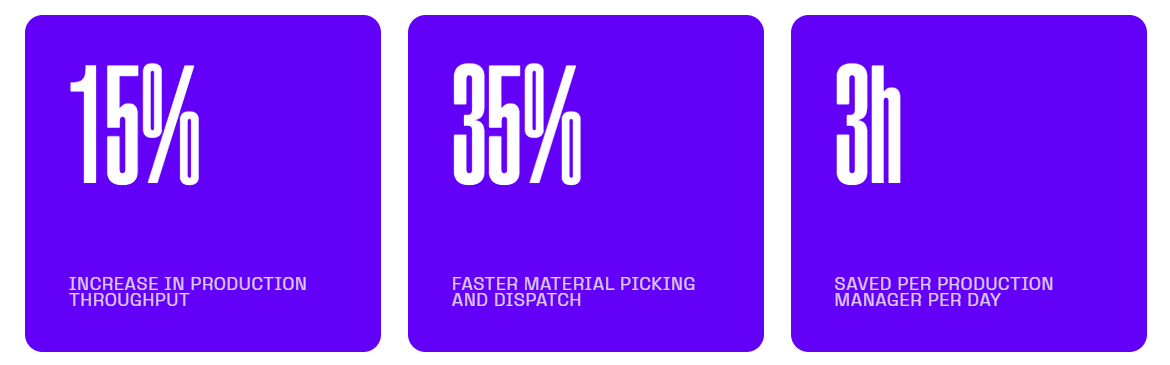
That's not just efficiency. That's competitive advantage. When your software mirrors exactly how your business works - not how some vendor thinks manufacturing should work - you unlock growth competitors can't match.
How We Work With Clients
When we work with companies outgrowing their SaaS, here's how we start:
We map one critical workflow together. Not the whole business - just the process bleeding the most time or money. Your sales funnel. Your fulfillment pipeline. Whatever hurts most.
We talk to your team. The people living with these workarounds know exactly where the friction is. We listen, document, and find patterns you might have stopped noticing.
We prototype fast. Most projects launch their first phase in 8-12 weeks. You see results quickly, gather feedback, then we build the next piece. No years-long implementations.
Conclusion
You've seen how generic SaaS tools quietly strangle growth. When your team spends hours patching gaps or chasing lost data, that's not just friction. It's a drain on profit and morale.
The real risk isn't the chaos you're managing today. It's the opportunities slipping past while you're stuck firefighting broken integrations.
Most leaders know something needs to change. They see the workarounds multiplying. They watch deals slip away. But they hesitate, unsure where to start or if custom software is worth the investment.
Here's what we know: the cost of waiting almost always exceeds the cost of building. Custom software isn't a bigger hammer. It's a new toolkit built for your exact job. When you ditch off-the-shelf limits, you free your people to focus on growth, not on babysitting brittle integrations.
Ready to stop losing revenue to broken tools? Let's talk. (opens in new tab) We'll map your biggest bottleneck, show you what's possible, and build something that actually fits.