AI Agent vs Automation Tool: The Difference
AI Agent: What Makes It Different From a Rule-Based Tool
An AI agent is a system that reads a task together with its context and decides what to do with it, including with input it is seeing for the first time. A rule-based automation tool runs a fixed instruction on input that matches a shape somebody described in advance. The difference shows up on the messy cases, and most cases are messy.
We have written about whether invoice automation needs a tool or a change of process (opens in new tab). That article took the word automation as given. This one goes back a step and defines it, because "agent" is now printed on products that work in completely different ways.
What an AI agent actually does
Three things, in order.
It reads the input as it arrives, in whatever layout the sender chose. It decides what the input means: which number is the total, which date is the due date, which company is the supplier. Then it acts on that decision in another system, and reports back the cases where it was not confident enough to act alone.
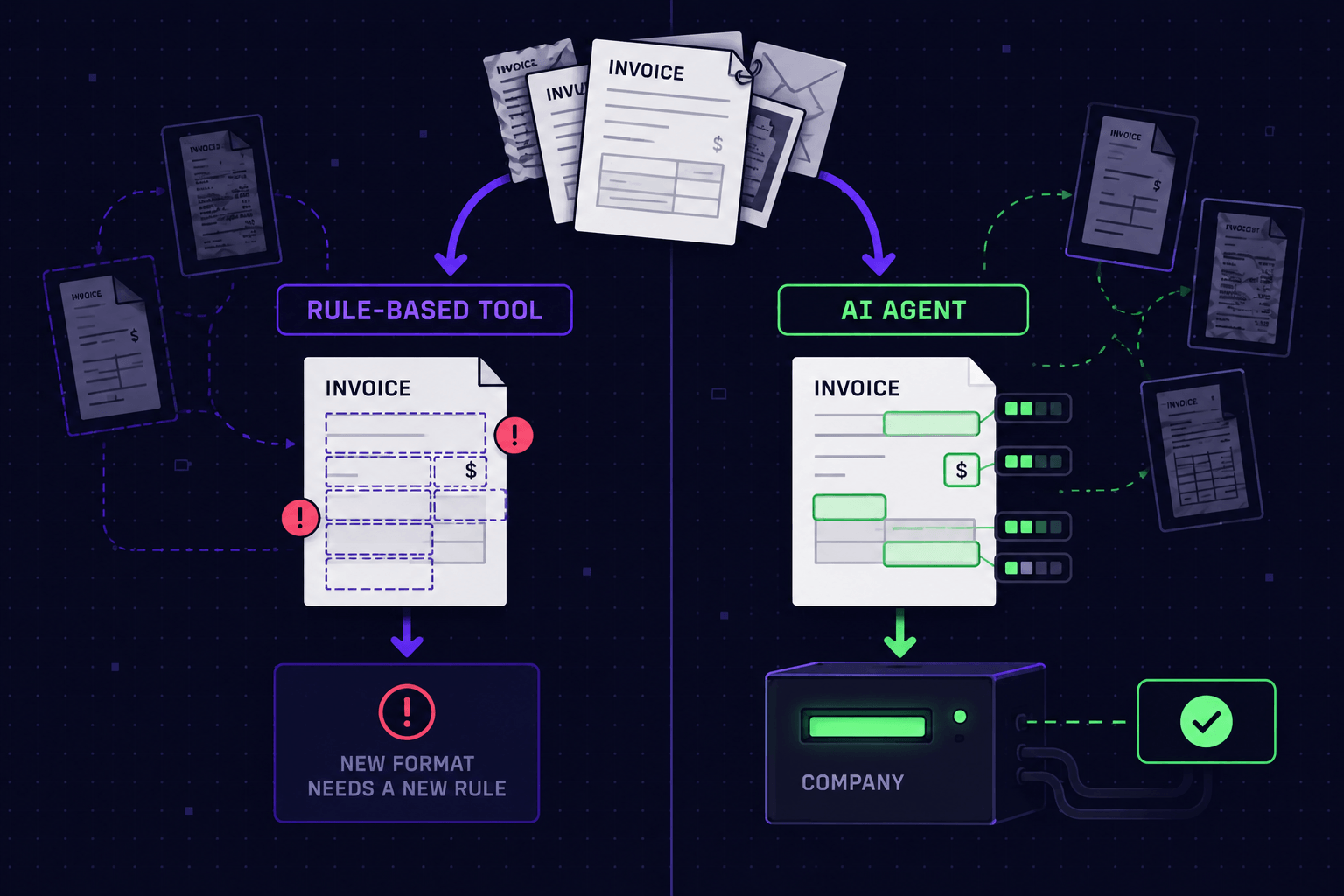
A rule-based tool does the middle part only if somebody already described the layout. Give it an invoice from a supplier whose template it knows, and it pulls every field correctly. Give it that same supplier's redesigned invoice next month, and it takes the wrong number, because the value it was told to read is no longer in that exact spot.
Why messy documents are where the difference shows
Structured data would make all of this easy. A machine-readable e-invoice arrives with the total already labelled as the total, and a rule handles it perfectly and cheaply.
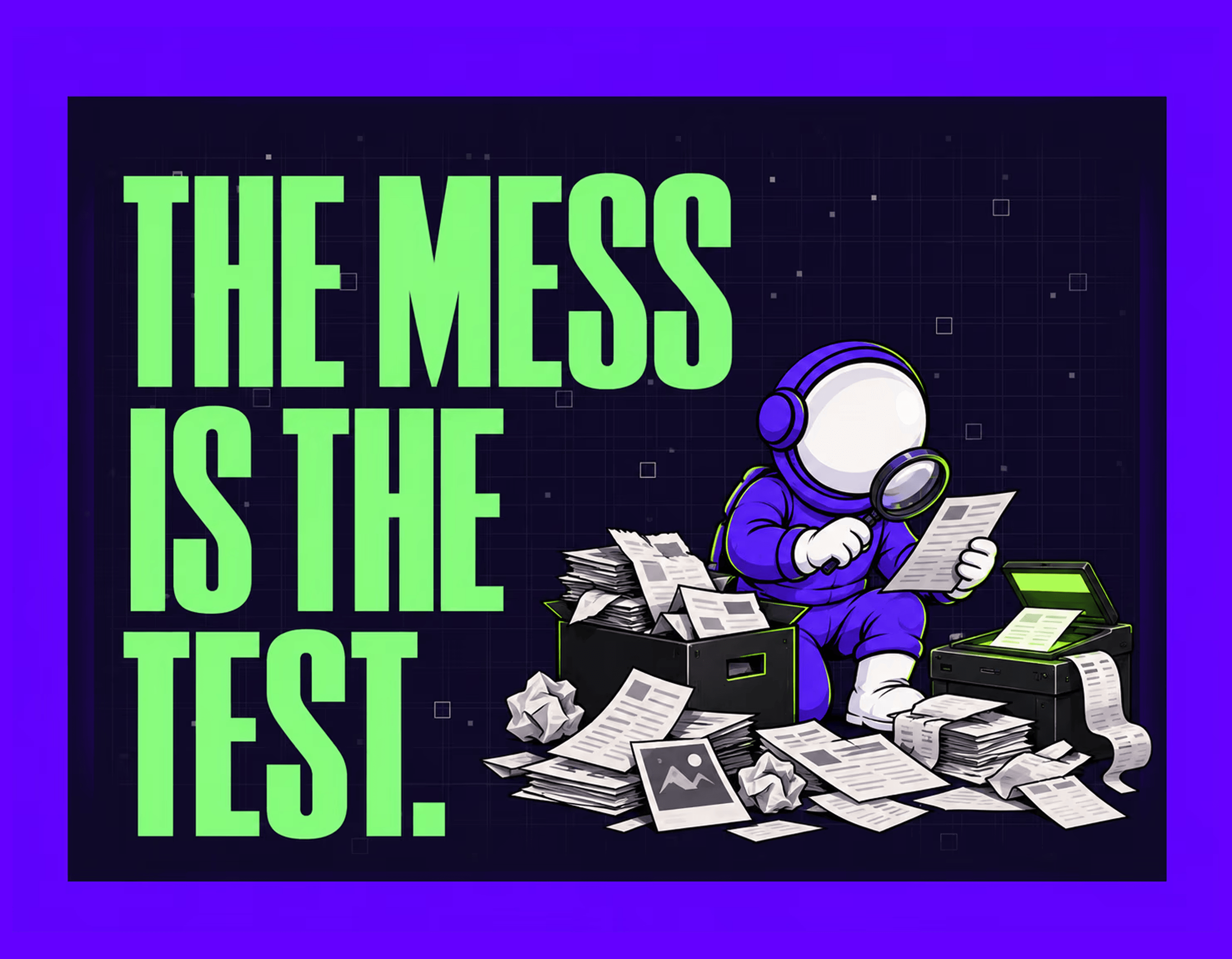
The problem is how much of the incoming pile is actually structured. In the companies we look at, the structured share is the smaller one. The rest arrives as a PDF attached to an email, a scan, or a photo of a delivery note someone took on their phone.
That is the gap. Rules cover the part of the pile that already behaves. Somebody works through the rest, every day.
Five things to check before calling something an AI agent
This is the filter we use when a company asks us which of the two they are being sold.
What to check | Rule-based tool | AI agent |
|---|---|---|
Input | Known format, described in advance | Any layout, including one it has not seen |
A new supplier | Needs a new rule or mapping first | Handled on arrival |
Uncertainty | The input matches or it fails | Returns an answer and how sure it is |
Exceptions | Stops and waits for someone | Routes the case to a person with the reason attached |
A change in the process | Someone rewrites the rule | The examples and the confidence threshold are adjusted |
The third row is the one worth reading twice. A confidence score is what lets you design the rest: you set the threshold, everything above it goes through, everything below it reaches a person. That person in the loop is part of the design, and the threshold is where you decide how much of the work they get.
One example: the invoice agent we built
We built ours for incoming invoices, and it is the clearest case we can show without naming anyone.
It reads the structure of a document rather than the history of your company, so an invoice from a supplier who has never billed you before is processed on day one. No template is prepared for it, and no archive is loaded first. The extracted data then lands in the accounting software you already use, either through an interface that accepts it directly or through a file import, so the software itself stays where it is.
After that it matches invoices against bank payments, with 95% accuracy on the automatic match, and one person gets through ten times as many invoices as before. The build, including the parts that were harder than expected, is described in how we built our AI invoice automation (opens in new tab).
How to tell an agent from a relabeled tool
Gartner has a name for the marketing problem here. In a June 2025 release it described agent washing (opens in new tab) as "the rebranding of existing products, such as AI assistants, robotic process automation (RPA) and chatbots, without substantial agentic capabilities", and estimated that only about 130 of the thousands of agentic AI vendors are real.
Two questions settle it in a sales conversation, and both are about behaviour rather than architecture:
- What happens when the system meets a document it has never seen? A relabeled tool answers with a setup step: somebody maps the new format first.
- What does it do when it is unsure? A system with no confidence score has nothing to say here, because to it there is only a match and a failure.
Ask for a demo on your own documents, including the two ugliest ones you can find. A prepared demo file proves the format was prepared.
When a rule is the better tool
Rules are cheaper, faster and completely predictable. There are three situations where that combination wins.
The input really is uniform. One supplier, one format, one file a week. A rule reads it in milliseconds and costs nothing to run.
The decision has one correct answer that fits in a sentence. If you can write the whole logic down without using the word "usually", write it down and automate it that way.
Every decision has to be explainable the same way twice. Some approval and audit processes need an exact, repeatable reason for every outcome. A threshold and a probability fit that worse than a written rule.
The cost of ignoring this is visible in the forecasts. The same Gartner release expects over 40% of agentic AI projects to be cancelled by the end of 2027, and names escalating costs, unclear business value and inadequate risk controls as the reasons. All three are decided before anyone writes code, which is why our first weeks go to the process rather than the model.
Where to start
The choice of technology comes second. The first question is which of your processes carries enough volume and enough mess to justify either one.
The free AI diagnostic (opens in new tab) takes about three minutes, covers six areas of a business, and ends with a written verdict on where automation would pay for itself and what kind it would have to be. If you would rather talk it through with a person first, get in touch (opens in new tab).