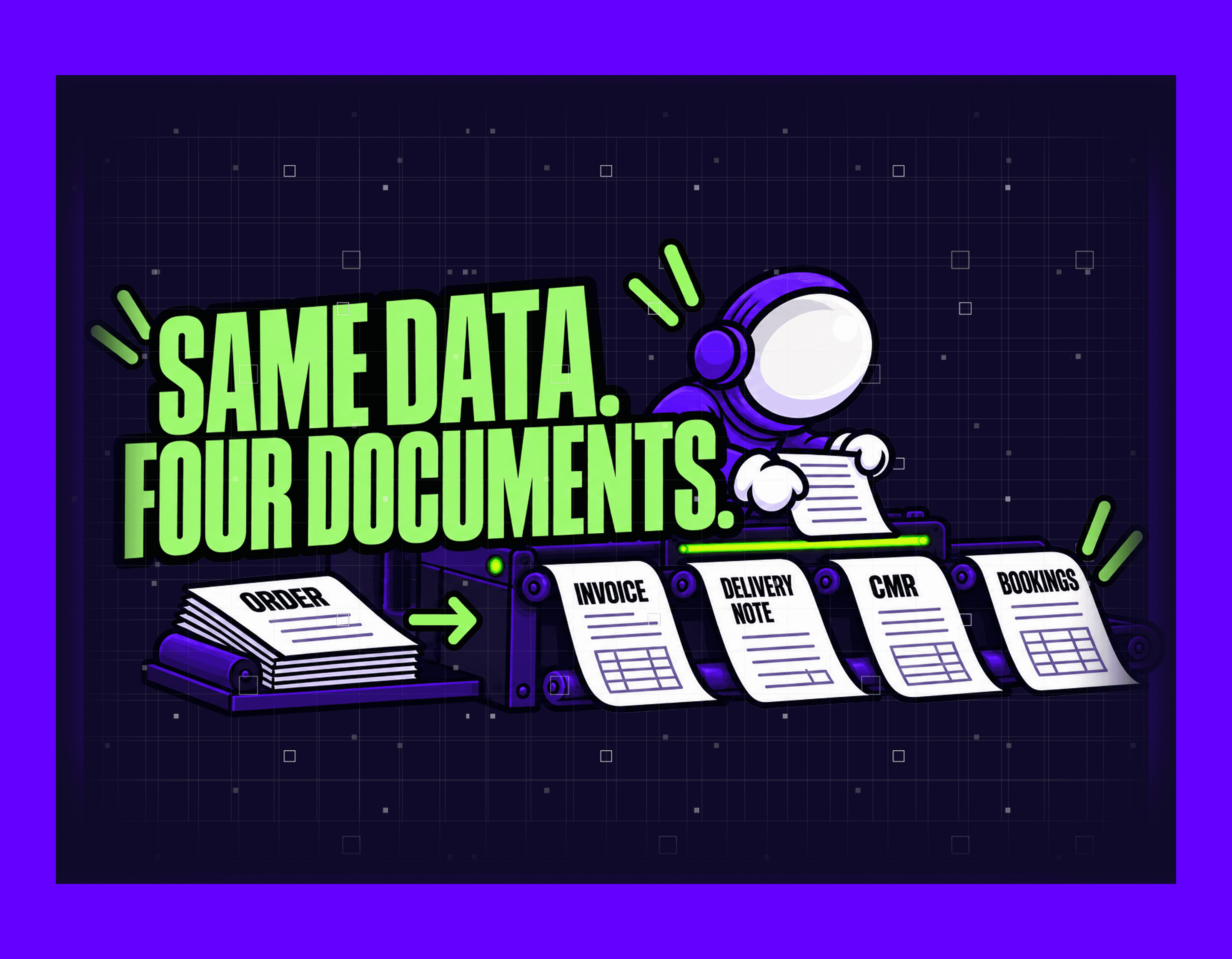
Accounting Software Integration: Which Tools Connect
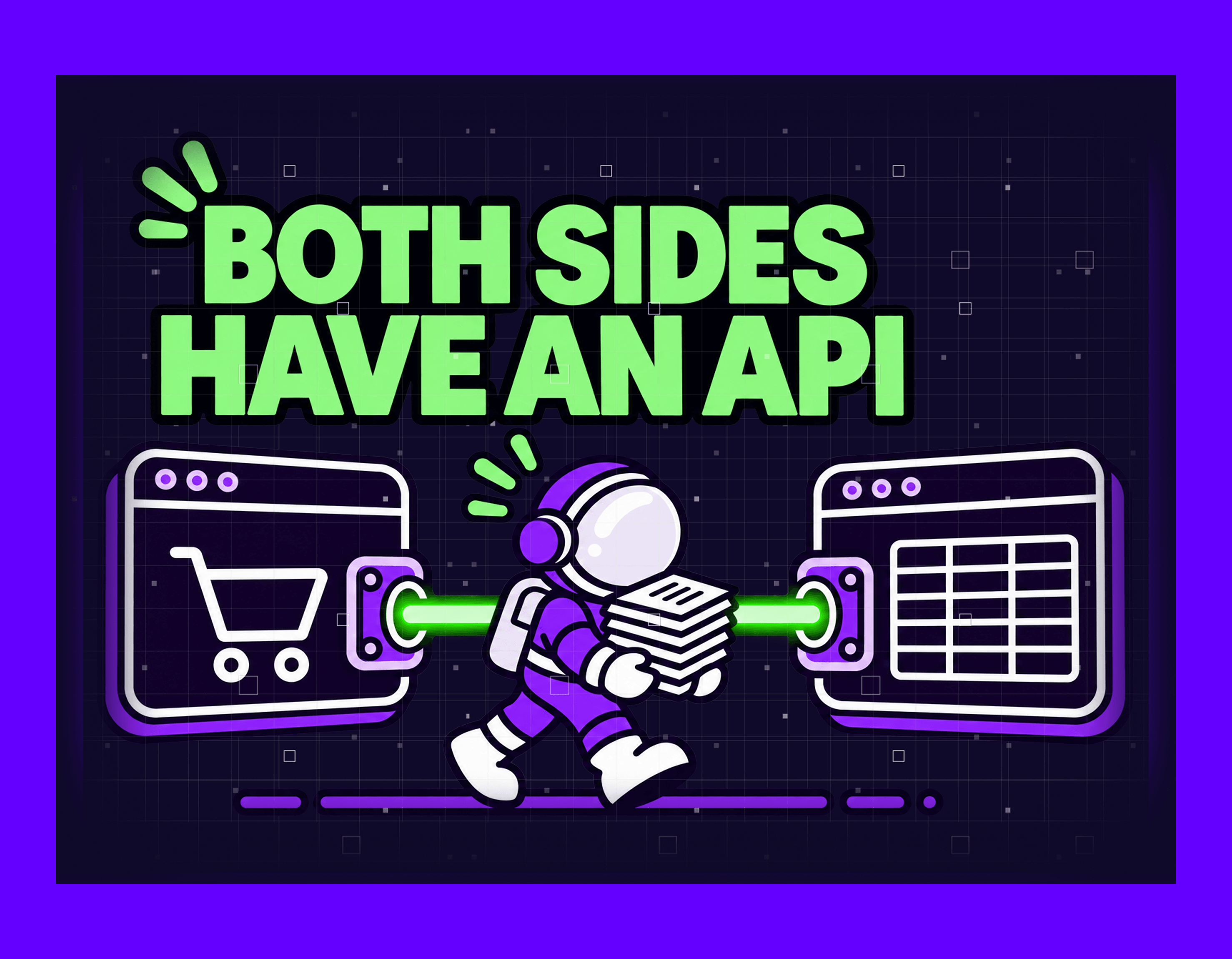
Someone opens the e-shop in one window and the accounting program in the other. Then they type yesterday's orders across. In both programs that order is already split into fields: customer, item, quantity, price. Both vendors publish how to reach those fields. Accounting software integration usually fails earlier than the technical work, because nobody checked what each side already offers. Below is what the vendors publish, and why the same order still gets typed in twice.
Which programs can be connected at all?
Every program in your company falls into one of three groups, and the group decides the size of the job.
The vendor publishes an interface. Documentation exists and says what can be read and written. Then the work becomes configuration plus an agreement about fields.
The program can export files. There is no live connection, but a scheduled file carries the same content. A nightly export covers reports, balances and most approvals.
Nothing leaves except the screen. Older installed software, narrow industry tools and abandoned systems sit here. The data exists, and the licence or the design keeps it inside.
Put each of your programs into one of those groups before you ask anyone for a price. Accounting software integration is that sorting job first and a technical job second.
What Lithuanian vendors publish about their own interfaces
Two systems in common use here document their interfaces in public. The detail in those documents is enough to plan with.
Rivile publishes a guide for Rivile API v2 and a whole section listing the systems it integrates with (opens in new tab). Named there: the e-shops Shopify, WooCommerce, PrestaShop and Pigu.lt. The same section lists the EDI operators Edisoft, Fitek and Telema. On the till side it names RASO cash registers and UVS WinPOS. It also covers the Wolt and Bolt APIs, GPAIS, the Via3L warehouse service and file upload to SharePoint. Its product page adds what the API itself reaches: purchase and sales documents, products, customers and stock balances.
Directo documents XML Direct, a component-based XML interface (opens in new tab). About fifty components are listed. They cover sales quotations, orders and invoices, then purchase orders, purchase invoices and stock receipts. Others reach items, movements, productions, customers, suppliers and contacts. Finance accounts, transactions, projects and employees are there too. Each component supports reading, writing or both, and stock levels and finance accounts can only be read.
Odoo documents an external API for the same kind of access to its own records.
Several programs used in Lithuania behave differently. For Finvalda, B1, Centas and Stekas, no public interface documentation came up in a search. That is not proof that an interface is missing. It means the answer has to come from the vendor in writing.
Below is what each side publishes, and what that leaves you able to do.
Program | What it publishes | What that lets you do |
|---|---|---|
Rivile | API v2, plus named integrations with Shopify, WooCommerce, PrestaShop, Pigu.lt, RASO and UVS WinPOS | Enter purchase and sales documents without a person, and read stock balances |
Directo | About 50 XML components; stock levels and finance accounts can only be read | Plan the direction by what the interface lets you write |
WooCommerce | A REST API covering orders, products, coupons and customers | Take orders in without a person reading them first |
Shopify | An Admin API in REST and GraphQL form, with named access scopes | Set what a connected app may read and change |
Swedbank | PSD2 APIs, plus a Gateway API that links accounting software to accounts | Stop retyping the bank statement |
What an e-shop, a cash register and a bank already expose
The other side of the copying is usually better documented than the accounting program.
E-shops. WooCommerce and Shopify publish their documentation openly, and each connection gets its own key with read or write access. That is why the e-shop side of a project is rarely the hard part. The work sits in deciding which orders become invoices and when.
Cash registers and marketplaces. Rivile's documentation names RASO and UVS WinPOS on the till side, plus the Wolt and Bolt APIs. For a company selling through several channels, that list shows which channel is already solved.
Banks. Swedbank's open banking page (opens in new tab) carries PSD2 interfaces that are open to regulated companies. A third party reaches them on your behalf. The Gateway API named on the same page is the line to read twice. It links accounting software to accounts in the Baltics. After the invoice, the bank statement is the document that gets retyped most.
Why does the data still get retyped?
Plenty of retyping happens between two systems that both have a documented interface. Nobody connected them.
An interface moves fields. The order number goes to the order number, the sum to the sum, the item code to the item code. Everything a person wrote outside those fields stays where it was. The comment line in the order carries some of it, and so does the note about delivering before Friday. So does the sentence in the covering email, or the request to invoice the parent company. None of that has a field on the other side, so a person reads the order anyway. Once they are reading it, typing the rest feels cheaper than asking for a project. Accounting software integration takes the fields, and the sentence stays behind.
This is where an AI system changes the arithmetic. It can read the free text that arrived with the record. Then it decides which part of it belongs in the other system. What it cannot place, it does not drop: the case stops and goes to a named person. That difference between reading a document and moving agreed fields is also what separates an agent from a rule-based tool (opens in new tab).
The second reason is less technical. A connection needs an owner, and the retyping already has one. Which of those copies is worth removing first is a separate question with its own answer (opens in new tab).
Frequently asked questions about accounting software integration
How do we find out whether our program has an interface? Ask the vendor in writing for the documentation link. An answer saying that integration is possible is a sales answer, and documentation is the fact.
Is a ready tool like Zapier or Make enough? For cloud tools that both sit in those catalogues, often yes. Installed local accounting programs are usually missing there, and checking takes a minute.
Does the data have to flow both ways? No, and one direction is the cheaper start. Decide which system holds the primary record, then let the other side receive it.
What if the program only prints reports? Then the exit is the report. The project becomes a reading job rather than a connection job, which costs more and still works.
We already pay for a ready integration. Why would we need anything else? You may not. A ready integration covers the documented path, and the work starts where that path ends.
What an interface does not solve
Three things stay outside it.
Your pair may already be built. Rivile names Shopify, WooCommerce, PrestaShop, Pigu.lt and several till systems in its own documentation. If both your systems are on a list like that, ask what it costs to switch the existing integration on.
Documentation does not mean your licence includes it. Interfaces often sit in a module, a plan or a version. The vendor confirms that, not the documentation page, and the answer changes the budget early.
A connection is not a one-off purchase. Both sides release updates, and interfaces get versions and end dates. Somebody has to notice that notice and act on it. That person is either named at the start or found during the first outage.
Where to start
Take the last record that travelled between two of your systems: an order, a supplier invoice, a delivery. Mark what a person moved by reading it. Separate the fields from the sentence that came along with the record.
That split is the answer. Fields only means your case is configuration work, and the three groups above tell you how big it is. A sentence in the mix means the connection leaves the reading in place. The reading is where the hours are.
Then the work becomes ours. We check the exits instead of trusting the documentation. Each of your systems gets put into one of the three groups. Accounting software integration is then priced by group, because those are different jobs. Where a ready integration exists, we say so. The commercial side of the question sits on our integration service page (opens in new tab).
Get in touch (opens in new tab) if somebody in your company retypes the same records every week. You will not need a list or any logins for the first conversation, only the names of the programs.