Shipping Documents 2026: How to Stop Retyping Them
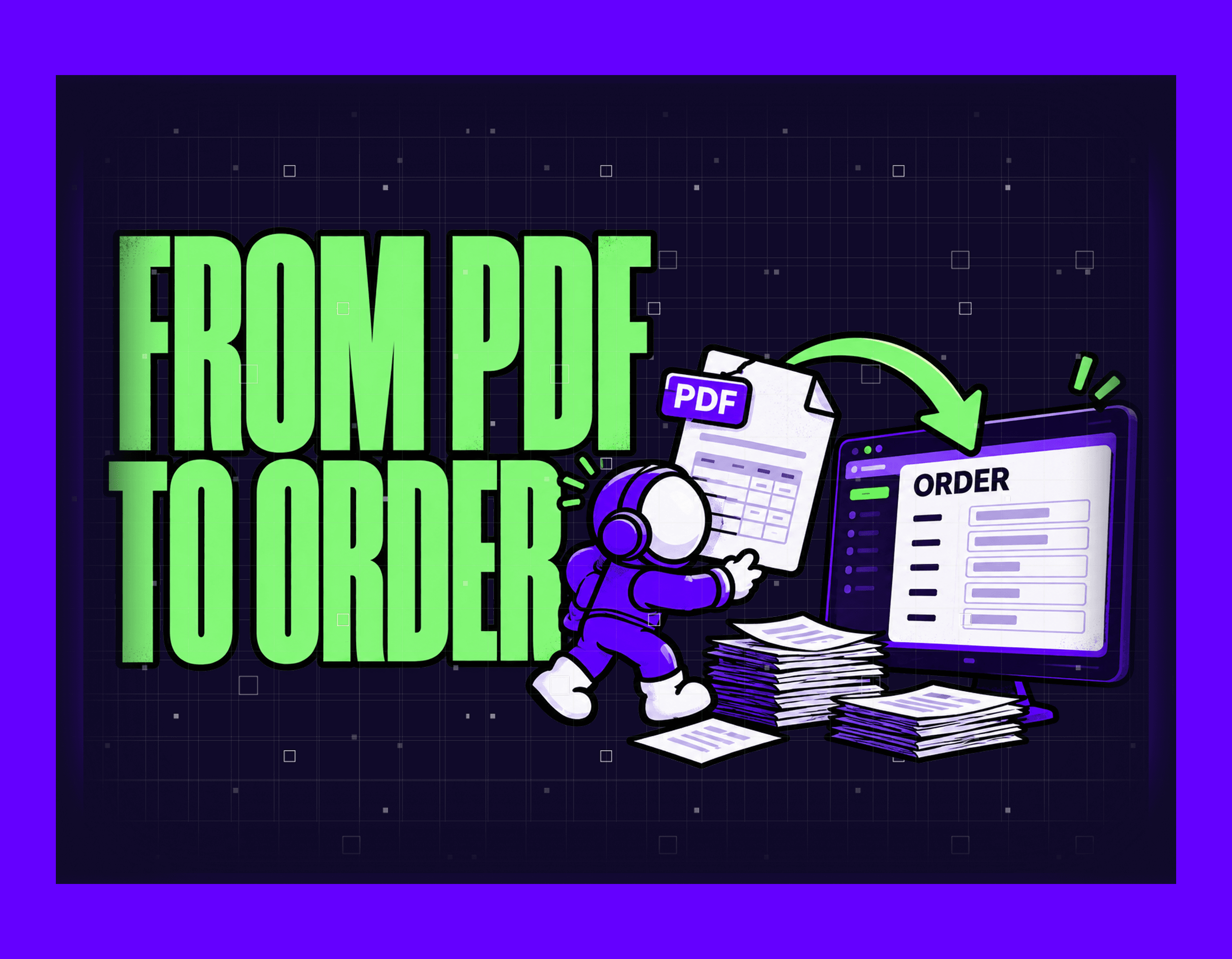
The pallets are wrapped and standing by the door. Somebody is at a screen building the paperwork that has to travel with them. Shipping documents are the invoice, the delivery note and whatever the carrier needs. All of them are built from one order that already exists. In most manufacturing companies a person builds them one after another, reading one screen and typing into the next.
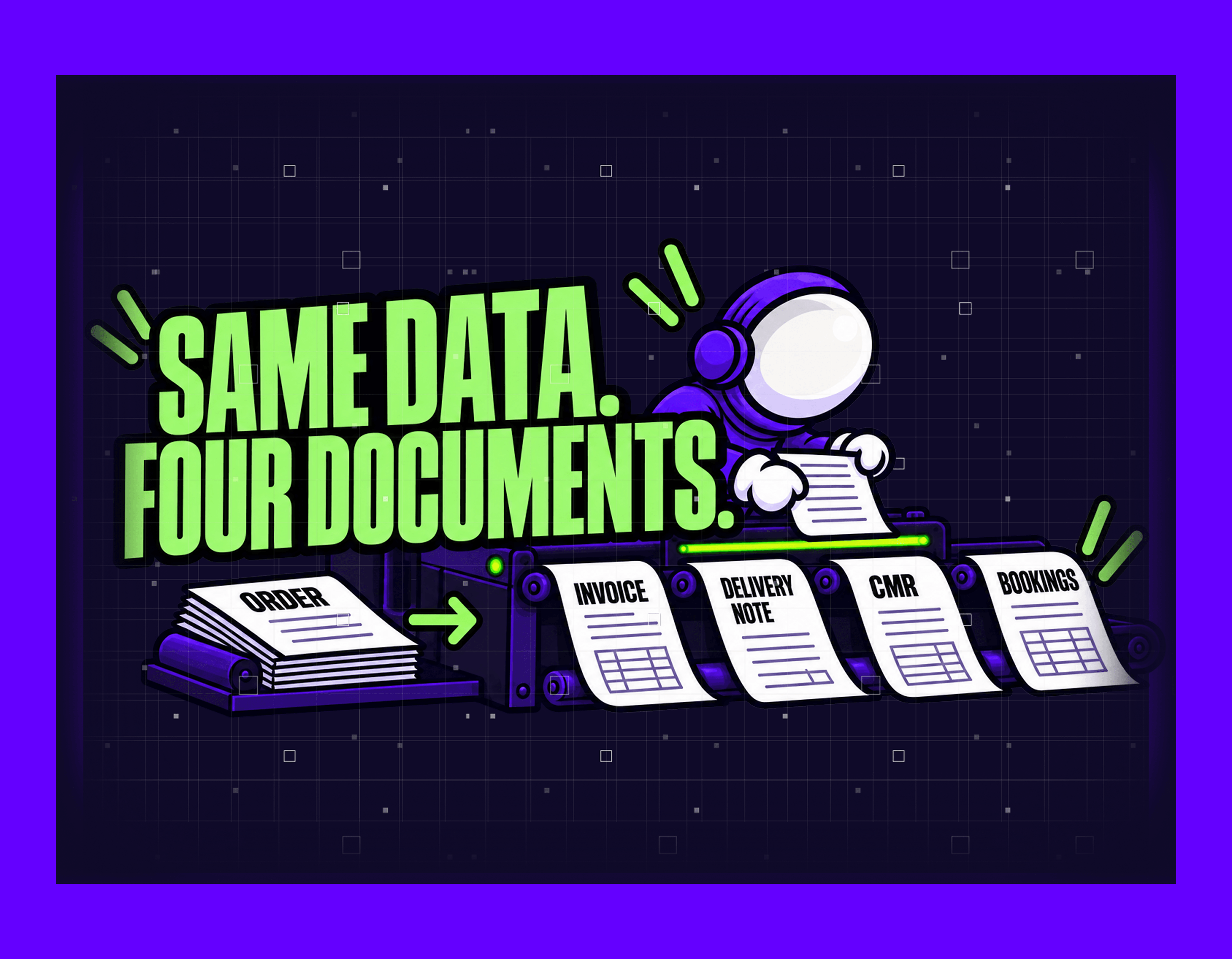
Nothing has to be found. Every field is already in the order: the customer, the lines, the quantities, the address. The same facts simply have to come out in four shapes, because four readers expect four different things. Trouble starts when the order changes after the documents are made.
Why do they get made at the last minute?
Parts of them can be prepared earlier, and plenty of companies do. Finishing them is the problem. The exact weight, the pallet count and the shipped quantities are known only once the goods are picked. So a company picks between two bad options. Prepare early and redo the work, or wait for the hour before the truck.
The truck is booked for three. At two, the quantities are still moving, because one pallet did not pass the final check. Half past two, and somebody opens the ERP and starts typing. The most error prone work of the week happens at the worst moment of the week.
This is the last step of a longer chain. It starts weeks earlier, at the point where an enquiry turns into a price (opens in new tab). There is no time pressure at that end of the chain.
What one shipment has to produce
Four outputs, and each one is read by somebody different.
The invoice goes to the customer's finance team. It has to carry their purchase order number. Without it, the invoice sits in their approval chain while somebody works out what it belongs to.
The delivery note travels with the goods. Whoever receives them checks pallets against lines. Those lines have to match what is actually on the truck.
The consignment note goes to the carrier. Its required content is set out in the CMR Convention (opens in new tab). Among the particulars are the gross weight and the number of packages with their marks.
The booking reaches the carrier before any of the rest. It needs a weight and a pallet count. Both exist only once the goods have been picked.
From 9 July 2027, EU authorities have to accept this information shared electronically through certified platforms (opens in new tab). That is an eFTI obligation on the authorities rather than on your company. The format will change and the work of producing the content will not.
What happens when the order changes after the documents are made?
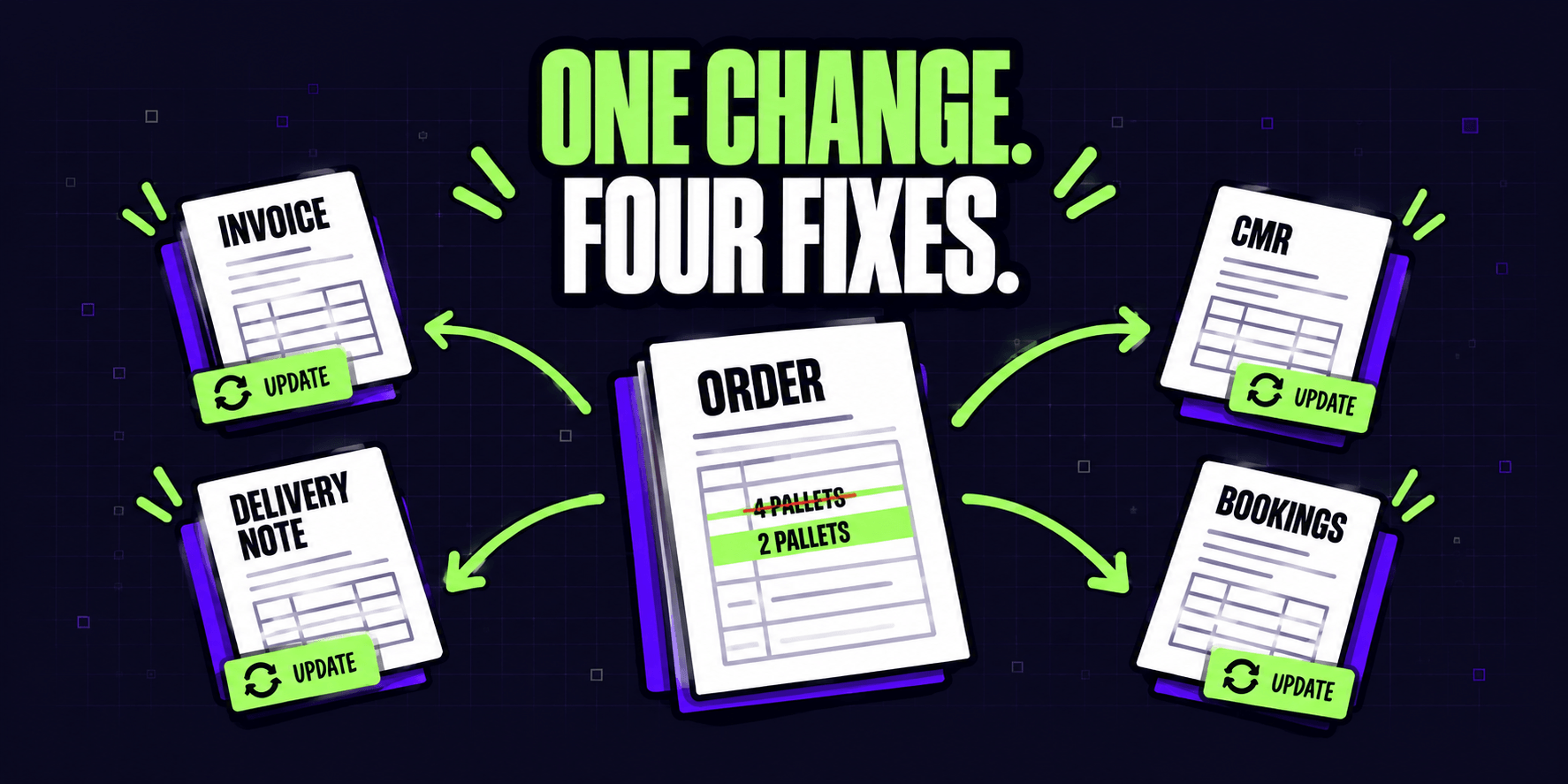
This is where the hour before the truck turns expensive. Two pallets stay behind. A line gets removed. The customer asks for delivery to their second site.
By then the invoice is issued and the consignment note is printed. Somebody has to remember which shipping documents are now wrong. Those get fixed, and the rest are left alone.
A template cannot help here, and it is worth being precise about why. It builds documents once, from the order as it stood at that moment. There is no way for it to know that the shipment going out has changed.
An AI agent can work from both sides. It can read the order and build each document in the shape its reader expects. Then it can compare what actually left against what the documents say. Where the two no longer agree, it stops those documents and names the difference. A person decides what to do, which is the same decision they make today, only earlier.
What we built for a steel manufacturer
One steel and metal structures manufacturer asked us to track material from enquiry to use on site. Every delivery, storage location and movement gets recorded once. For them, output rose by 15%. Picking and dispatch got 35% faster, and the production manager got three hours of his day back. Those numbers come from that one project (opens in new tab), not a forecast for yours.
The three hours matter more than the percentages. They had never appeared in any cost report, because nobody had ever invoiced for them. Part of those hours went into shipping documents, which is why that step is worth looking at on its own.
Frequently asked questions about shipping documents
Will we have to change our ERP? No. The documents are built from what your ERP already holds, and the result goes back into it. Which route that takes depends on what your ERP allows, and that gets checked before any date is promised.
Our carrier has its own booking system. Does that change anything? It changes where the booking lands, not where it comes from. The weight and the pallet count still start in your order. Where that system accepts data from outside, the booking can be prepared and handed to it.
Can an agent produce a consignment note on its own? It can prepare one. Signing it stays with the driver and the person handing the goods over, exactly as now.
What about shipments that need customs paperwork? Those need the same data plus a declaration, and the declaration is its own job. The agent can assemble what the declaration is based on, and a person files it.
How does this cope with a customer who wants their own layout? That is the normal case rather than the exception. Each customer's requirements are agreed once. After that the same order produces the shape each of them expects.
When this is not worth automating
Three situations where this work is better left alone.
You ship the same thing to the same customers. One pallet of a standard product to five regulars does not need any of this. A template in your ERP produces those documents, and it will keep producing them correctly.
The carrier does all of it for you. Where a forwarder takes the order and issues the documents under your name, the hours are theirs. Then the project belongs to them.
The order data is already wrong. If quantities in the ERP do not match the floor, faster shipping documents are four wrong papers. That gap gets closed first, and we have written about why process automation starts after process repair (opens in new tab).
Where to start
Take the last ten shipments you sent out. For each one, count how many separate documents went out. Then count how many times the same number was typed. Mark the shipments where something changed after the first document was made.
Those marks are the answer. Few of them mean the set comes out the same every time, and a template will do. Many of them mean the documents get rebuilt under time pressure. That is the part worth taking off a person.
From there the work is ours. We look at which fields in each document come from the same order. Then we agree where the system has to stop and ask a person.
Describe how your shipping documents get made (opens in new tab). A written answer comes back within one working day. It covers whether the work is worth automating and what it would cost.