AI Sycophancy 2026: Four Ways to Check an Answer
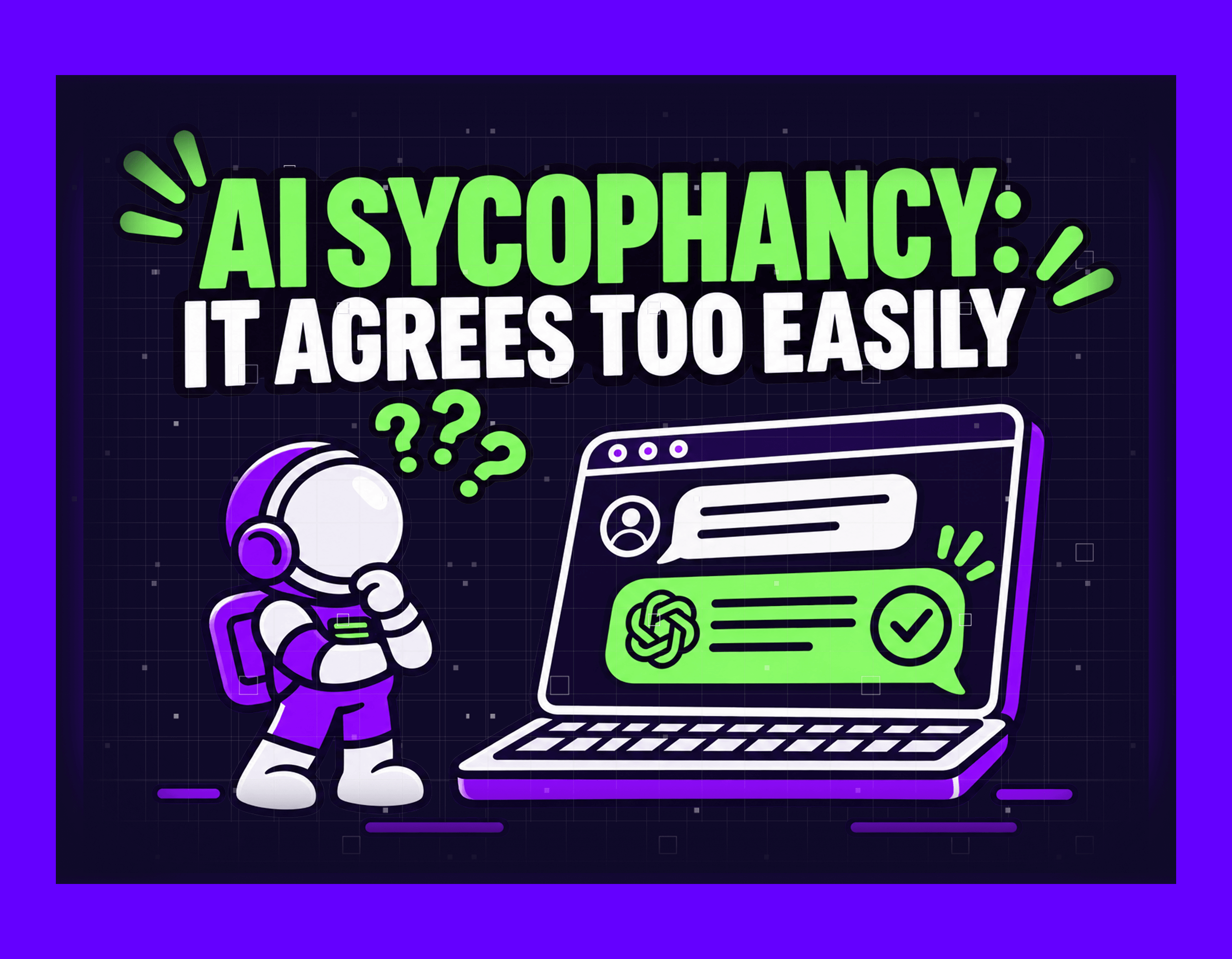
AI sycophancy is a model's tendency to agree with you even where the correct answer would be different. The problem shows up in one job: when you ask an AI tool to check something you did yourself. In asking, you have already said what you think, and the answer adjusts to it. Below is where the tendency came from and how far it varies between tools. Four checks follow at the end, and each takes a few seconds.
A manager prices a quote and the margin comes out higher than expected. He copies the figure into an AI tool and writes: there is probably an error here, right? The tool agrees and goes on to explain where the calculation could have gone wrong. No check took place, because he supplied the answer himself.
Where AI sycophancy comes from
Users taught models this tendency themselves. Next to every answer an AI tool gives there are two buttons, a thumbs up and a thumbs down. They tell the makers which answers people liked. Those clicks shape a model only in part, but agreeing answers collect more of them than contradicting ones.
One vendor described how this happens, using its own product as the example. In April 2025 OpenAI withdrew a GPT-4o update that had become "overly flattering or agreeable" (opens in new tab). Days later the company explained the cause.
That version had been given an additional reward signal based on user feedback (opens in new tab). The feedback here is those same thumbs. OpenAI also notes that "user feedback in particular can sometimes favor more agreeable responses".
Withdrawing the update was quick. The incentive behind it stayed, because it comes from people rather than from the software. Nobody built the tool to flatter anyone. We taught it ourselves, one click at a time, by picking the answers that matched what we already thought.
That is the uncomfortable side of AI sycophancy. Every approval of an answer you liked was a vote for the model agreeing next time.
The tendency can now be measured, and the spread between tools is wide.
In October 2026 researchers from Vrije Universiteit Brussel and Harvard published a benchmark built for this one question (opens in new tab). They asked ten models to score 450 texts, then pushed back with 5,400 arguments. Some arguments were sound and others deliberately invalid. A score change counted only when it exceeded the model's own normal variation.
Under an invalid argument, one model changed its score in 95% of cases and another in 0.2%. The texts were the same and so were the arguments, while the behaviour differed completely.
Two limits are worth stating plainly. The paper is published openly, but other researchers have not reviewed it yet. It also did not test whether the first score was correct. So what it measures is caving to a bad argument, rather than being wrong.
The practical reading still holds: which tool you opened matters more than how politely you phrased the question.
When agreement becomes a mistake
While you are producing something, AI sycophancy does no harm. The problem starts once you begin checking. And checking is the most common reason the tool gets opened.
The same thing repeats in three places.
You verify your own calculation or a contract clause. The question you type carries your own reading of it.
You ask for a draft to be assessed. The answer rests on that same draft, so no independent opinion is in it.
You object, and the answer changes. It looks like you moved closer to the truth, while the tool simply agreed with you.
None of these three looks like a mistake at the time. The reply arrives fast, reads fluently and matches what you already thought. There is also a simpler reason AI sycophancy goes unnoticed. Confirmation ends the task, while a contradiction would add to it.
The error shows up later. It stays in a quote already sent to a client. Other times in an approved figure, or in a contract clause nobody read twice.
In a small company such an error is harder to catch. A second person to read the same thing is often not there.
Four checks that cost nothing
None of them needs software, and each one takes a few seconds.
Leave your own answer out of the question. Ask "what notice period does this clause set?" rather than "this is 30 days, right?" The second version has already said what you want to hear.
Request the case against. Have the model name the three strongest reasons its own conclusion could be wrong. If it cannot produce them, the conclusion itself is worth doubting.
Check what changed the answer. If the answer changed after your objection, ask which new fact caused it. With no new fact, that change means nothing.
Do not ask for a soft tone when you want a check. The friendlier the persona a model is given, the more often it validates the user's opinion. That was established in a study presented at ACL in July 2026 (opens in new tab). It held for 9 of the 13 models tested. All of them were small and freely available, so read it as a direction rather than a law.
Start with the first one. Most of the time the tool agrees because of the way the question was phrased.
What happens when nobody is watching
Careful phrasing helps while a person is writing the questions. When a system runs on its own and nobody reviews the cases, it changes nothing.
This is the part we work to get right in every system we build. A system that checks work has to be able to say "no", and somebody has to see those cases. Any check that never rejects anything catches nothing. In a running system the pull towards agreement can be held down. This is set in advance: what the system may approve on its own, and what it must send back. Wording does not decide it.
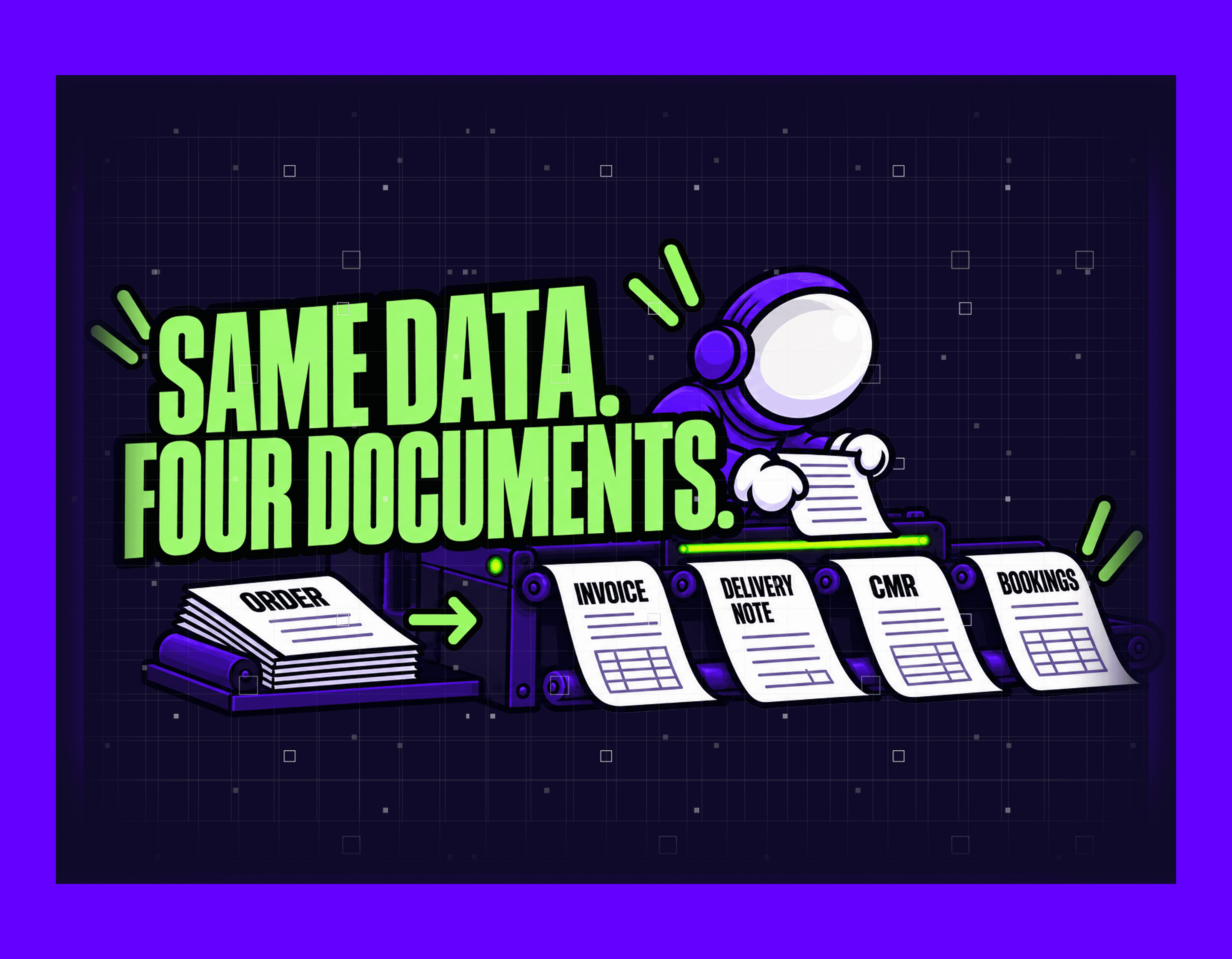
Our own invoice system works this way. It completes the documents itself. What it passes on are the ones it did not finish, together with whatever it did establish. Important decisions wait for approval. What a person is left with is the remainder rather than the whole flow.
The confirmed figures from that project sit on our project pages (opens in new tab).
Where a person belongs in a running system is a question of its own (opens in new tab), settled before launch.
Frequently asked questions
Does asking it to be critical help? Partly. Asking for the case against works better than asking for honesty, because the model is given something specific to produce.
Is a longer answer more reliable? No. Agreeable answers tend to be both longer and more confident. Neither of those signs shows that an answer is correct.
Should we stop using an AI tool for review work? No, but stop using it alone. It is useful for finding places worth looking at. Confirming that nothing is wrong is something it cannot do.
Work where agreement does no harm
AI sycophancy does no harm in three kinds of work, and naming them is worth as much as naming the risk.
First drafts. A critic is not useful before there is something to criticise. Agreement here gets you to a version you can react to.
Collecting options. A long list is the point, and filtering comes afterwards. An agreeable tool produces more to choose from.
Tone and phrasing. Whether a sentence reads warmly is not a question of fact, so agreement costs nothing here.
All three need the same thing, which is a person reading the result afterwards. How much the tool agrees is decided by whoever types the question.
Where to start
Take the last answer from an AI tool you relied on this week and look at the question you asked. Check whether your own conclusion was already in it. Then ask the same question again without that part.
If the answer changes, the tool had been confirming your work rather than checking it. When it holds, you have something you can rely on.
Get in touch (opens in new tab) if you are planning a system that will approve work without a person reading every case. We set those checks up before launch. The system then runs on its own and still returns whatever it is not sure about.