Inventory Sync Between Three Systems
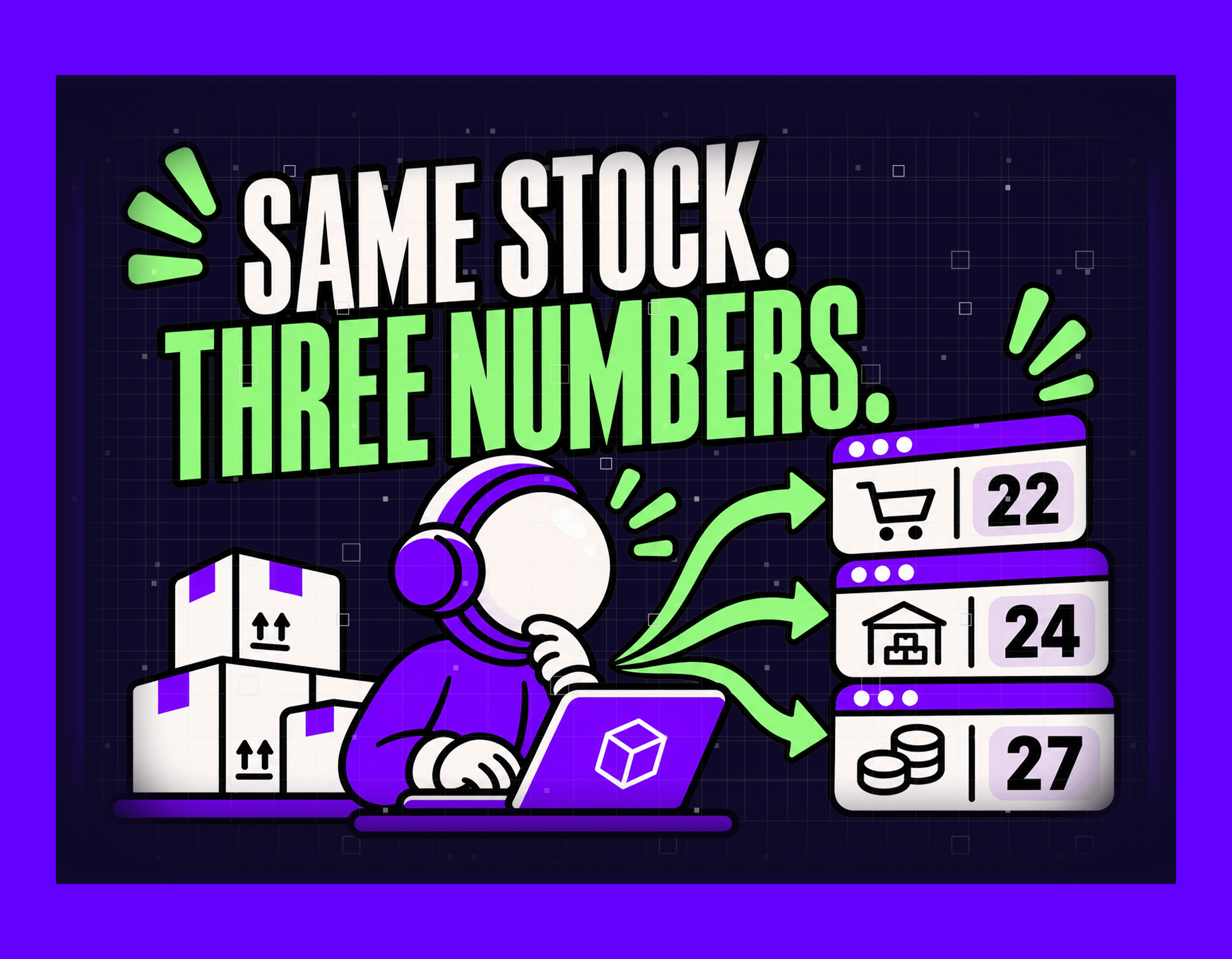
A customer calls and asks whether the part is in stock. The sales manager opens the shop admin, then the accounting program, then writes to the warehouse. Three answers come back, and they do not match. She passes on the one she trusts most. Inventory sync puts the same quantity and the same order status into all three places, with nobody typing it twice.
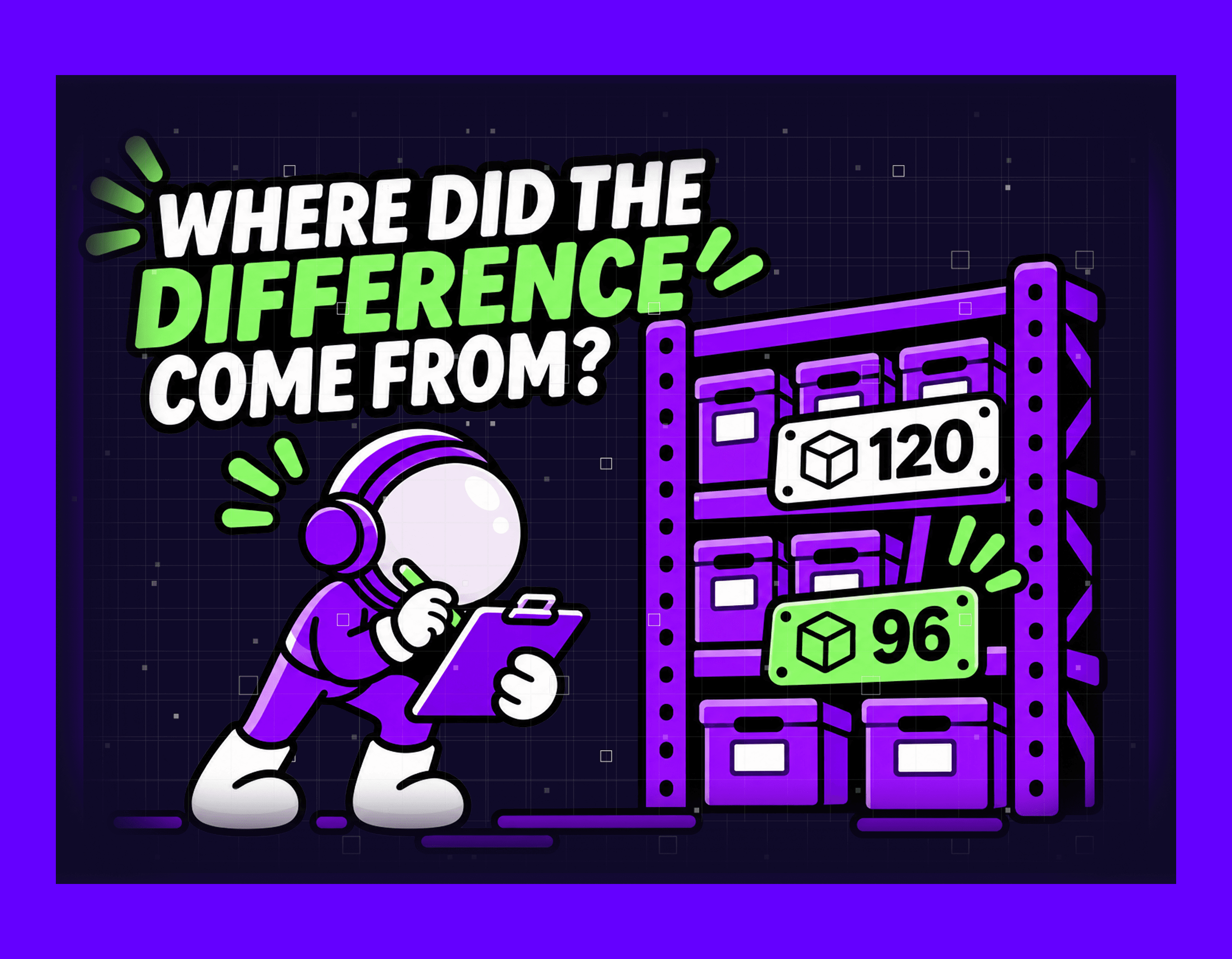
Copying a number is the quick part. The time goes into one decision: which of the three is right at this minute. Each system writes the same item down at its own moment. Part of that gap is supposed to be there.
Why do three systems show three different numbers?
Each of them takes the item off at its own point in the order. The shop takes the quantity away when the customer pays. A picker takes it away when the goods leave the shelf. Accounting takes it away when the invoice is issued. Between payment and invoice, each of the three is right about a different minute.
A copy made by hand happens whenever somebody has time for it. In between, every system is right about its own moment. Nobody looking at the screen can tell which moment the number belongs to.
In many companies a fourth number sits beside the three, in a spreadsheet. March 2026 brought a survey of 400 warehouse, inventory, supply chain and operations professionals. It found that 74% rely on spreadsheets as their only or main inventory system (opens in new tab). The research firm OvationMR ran it for a company that sells inventory software. Respondents were American, so the figure shows a direction and not a measurement of your warehouse.
Which stock differences are normal?
Every order passes through several steps, and after each one the quantity changes in one system before the other. That is how a gap opens and then closes on its own. Three such gaps turn up in almost every company that sells from stock.
The goods are paid for and still on the shelf. Nobody has picked them yet, so the shop shows fewer than the warehouse. Picking closes that gap.
The goods have gone and the invoice has not. Pallets are loaded in the morning and invoiced later the same day. Until then, accounting still holds a quantity the warehouse no longer has.
One line of a paid order is still waiting. Part of the order went out, and the rest follows next week. That order is finished and open at once, and each system rounds it differently.
A line is worth a person's time once the step that should have closed it has passed. The target is that every difference has a step behind it, and not that three numbers match every minute.
The five steps an inventory sync is built from
Each of them leaves something to a person.
We agree which system owns which number. One system owns the stock level, another the order status, a third the price. Everything else reads from the owner, and only the owner writes. Your company settles this once, in a meeting rather than a project.
The order travels from the shop with its lines. Item code, quantity, agreed date and the customer reference move together into the warehouse and accounting. Nobody opens that order again to retype what it already holds.
The write-off happens at the moment of picking. A picker confirms the line on a screen or a scanner. The shop quantity drops in the same minute. Confirming has to be easier than skipping it, or the step stops happening.
Every line is compared and given its step. Several times a day the system sets the three sources side by side. It attaches the step each order has reached. Lines that no step explains are flagged.
A named person gets the flagged lines. With each line come the documents the system read. Review then starts from a reason instead of a bare alert.
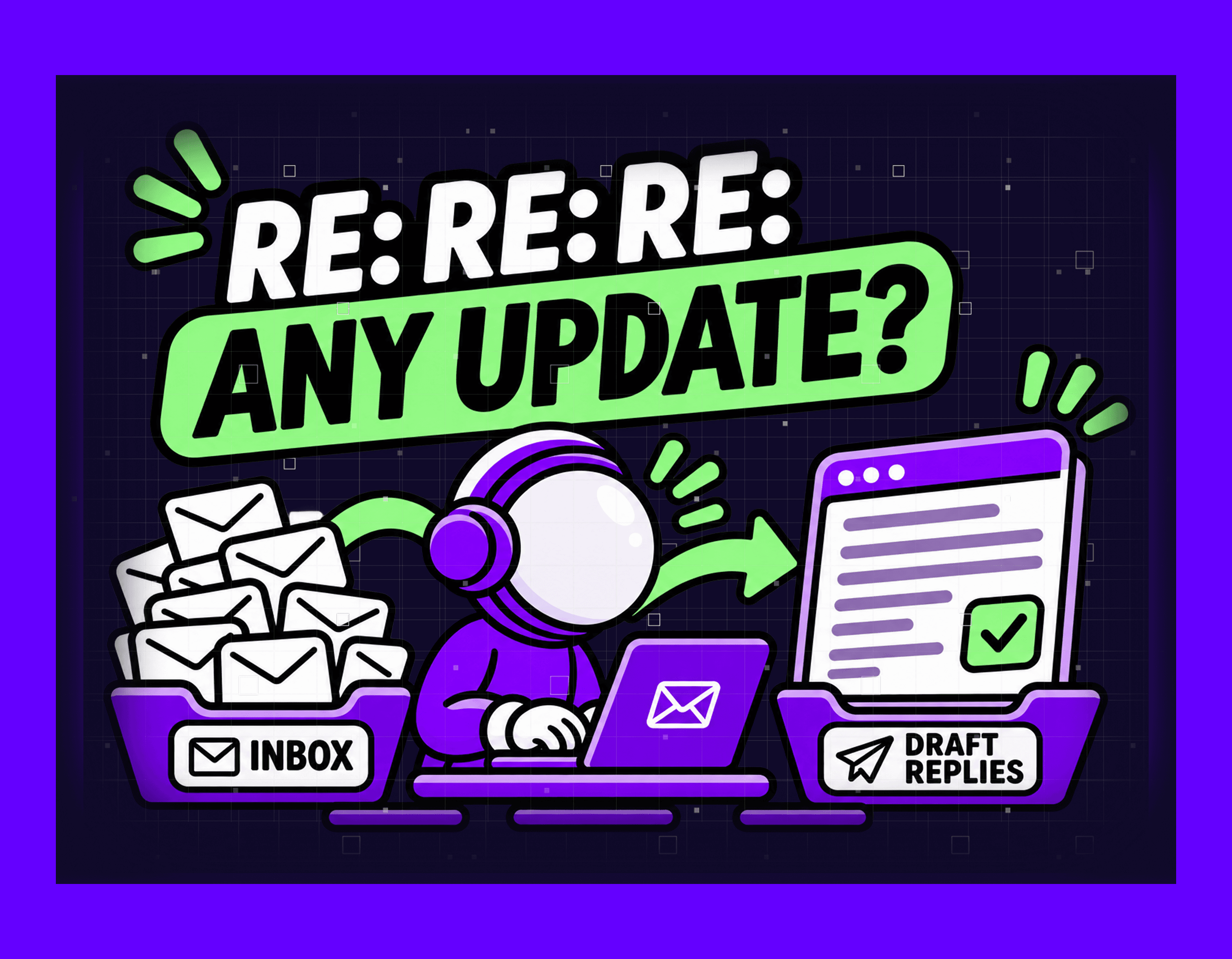
A rule can compare two numbers and report that they differ. Whether the difference is still moving is written outside the fields. It sits in a picker's note, a courier's message, a supplier's reply about a part-shipment. An AI system reads those in the words the person used. It can then say which step the order has reached. That answer is what inventory sync needs, and a rule has no way to produce it.
What changes for the team once a sync runs
Four things look different afterwards, and faster typing is not one of them.
The quantity a customer hears holds this minute. Nobody calls back an hour later to explain that the last one has gone.
One question stops needing three windows. A manager answers from a single screen. The warehouse stops being interrupted to confirm what a system already knows.
Flagged lines become work that can be planned. Somebody opens a short list at a set hour. Gaps stop turning up while a customer waits on the phone.
A new sales channel stops meaning a new copy. Adding a marketplace or a second shop adds a connection. It no longer adds a person who retypes.
The example below is a client project we built ourselves.
For a sheet metal manufacturer we rebuilt the ordering side. A customer uploads a drawing and picks the material, the dimensions and the extra operations. Then the order reaches the internal dashboard ready for production (opens in new tab). Along the way the file is converted into the format the machines accept. Nobody opens that order again to type it in.
We have published no figure for how much an inventory sync shortens this work, so there is none here. That project shows something narrower. An order that arrives structured never reaches the step where somebody retypes it. Nothing is left to reconcile afterwards. The stock side is a service of its own, and the shortest version of it takes from two weeks (opens in new tab).
Frequently asked questions about inventory sync
Can we start with part of the catalogue? Yes, and that is the usual way in. Fast-moving items produce most of the differences. A first stage covering them shows what the rest would be worth.
What happens to an order that ships in two parts? The remaining line keeps its own step and stays open. That order is not closed early. Whatever has not left is still counted as present in the warehouse.
Does a sync repair the differences we already have? No. It starts from the movements that happen after it is switched on. A record that already disagrees with the shelf needs its cause found first. Usually that cause sits in a movement nobody wrote down (opens in new tab).
What if we also sell on a marketplace? Every channel that holds its own quantity needs its own connection. A channel that gives no quantity back keeps a person in the middle. Which of yours those are is a question for the start of the project.
How long does this take? From two weeks for one pair of systems. Each further channel adds to that. The honest answer for your case comes after we see how an order travels through your company.
Three situations where inventory sync fixes nothing
All three share one thing: the second number is missing, or its error costs nothing.
You make everything to order. Nothing is ever limited, because every item is cut once the order arrives. There is no quantity to protect. The work worth doing sits earlier, in how the order is taken.
Nobody outside the company ever sees the quantity. With no shop, no marketplace and no customer portal, a wrong number costs a walk to the shelf. That walk is real, and it is a weaker case than a cancelled order.
Movements are not written down at all. A sync moves whatever the systems hold. Where nobody records a transfer or a write-off, it will move a wrong number faster. The habit of recording has to come before any connection.
Where to start
Ask the person who answers the phone which number she trusts when a customer asks about stock. One question, and the answer takes a minute.
Her answer shows where the owner already is. If she names one system and turns out to be right, your numbers agree. The work is then somewhere else. Should she check with the warehouse first, the warehouse is the real owner, and the other two arrive late.
We agree which system owns which number. Then we move the order and the write-off without a second entry. A person gets the lines that no step explains. The result is written back into the programs you already use.
Get in touch (opens in new tab) if a customer has already been promised something that had left the shelf. It helps when the person who compares those numbers daily joins the first conversation.